Zoom
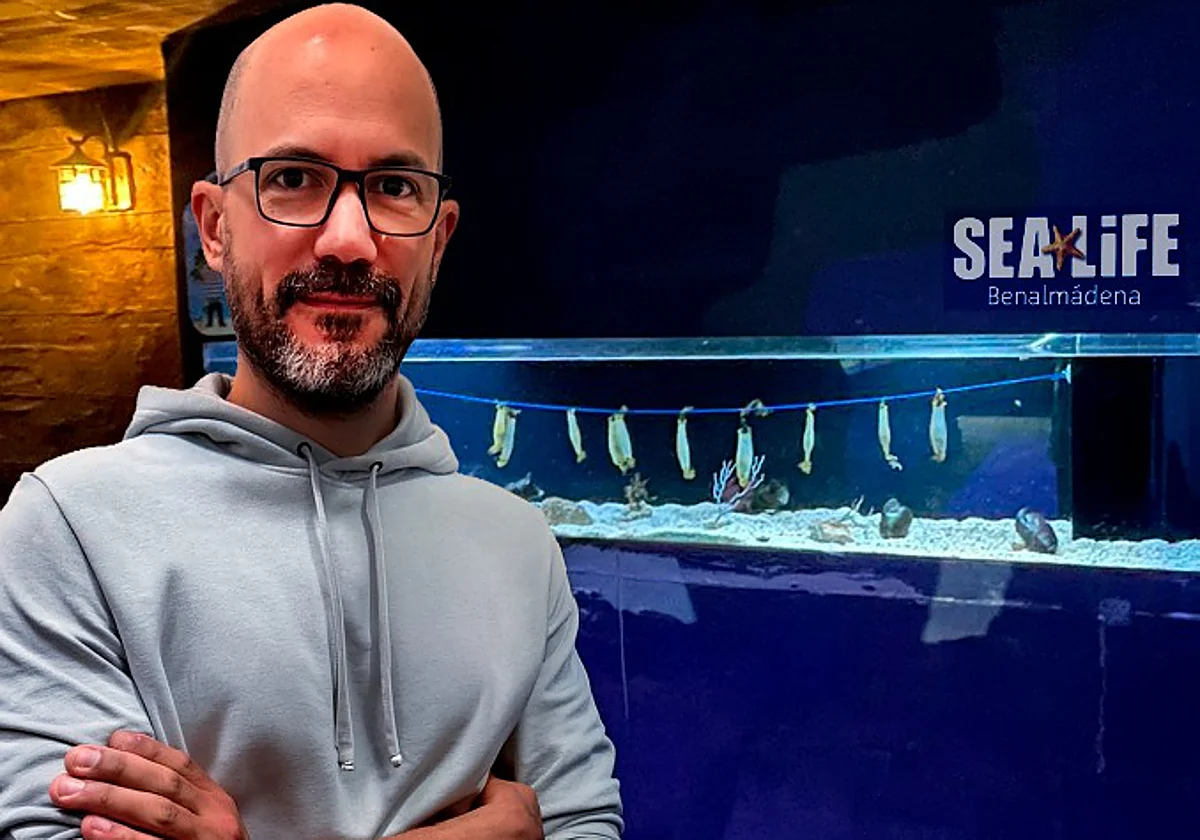
Professor Juan Pascual Anaya at Sea Life Benalmádena. SUR Sea life Benalmádena signs agreement to investigate how certain blood diseases developIn collaboration with Malaga university, the initiative will study shark embryos to analyse how diseases such as leukaemia develop and to explore potential ways to treat them
Monday, 6 April 2026, 13:11
Sea Life Benalmádena has signed a collaboration agreement with the University of Málaga (UMA) to promote an innovative study on shark embryos - with the aim of understanding the evolution and formation of blood.
This initiative will allow researchers to investigate in greater depth how certain blood diseases develop, helping to potentially contribute to future treatments, such as those used for leukaemia.
The study has been launched by the department of animal biology at the UMA and forms part of the research by Professor Juan Pascual Anaya, which focuses on understanding the evolutionary origin of novel structures in metazoans (animals made up of more than one type of cell). In this context, sharks constitute a key experimental model for addressing fundamental questions about the evolutionary origin of these structures.
The use of sharks at Sea Life Benalmádena - specifically the small-spotted catshark and the bamboo shark - will allow researchers to directly analyse the structure, organisation and potential functional role of the dorsal aorta (embryological vessels) during development, as well as to evaluate its possible involvement in the generation of blood stem cells.
To achieve this, techniques from molecular and developmental biology will be employed, including gene expression analysis and cellular characterisation at different embryonic stages.
“This study will help to redefine current models regarding the origin of our blood system and to better understand the genomic and developmental changes that gave rise to this biological innovation. By studying sharks, for example, it will be possible to integrate data from development, genetics and evolution to address one of the fundamental questions — how new structures and functions arise throughout evolution. This has particular importance for the discovery of new pathways that may allow us to better understand blood diseases, including different types of leukaemia,” explained Professor Anaya.
"If, in addition, we are able to contribute to a line of research that may help identify ways to treat blood diseases such as leukaemia, our satisfaction will be immense,” the director of Sea Life, Elisabeth Zorat, added.
The collaboration agreement between Sea Life and the UMA will last for a period of five years, with the possibility of extension if necessary to complement the study.