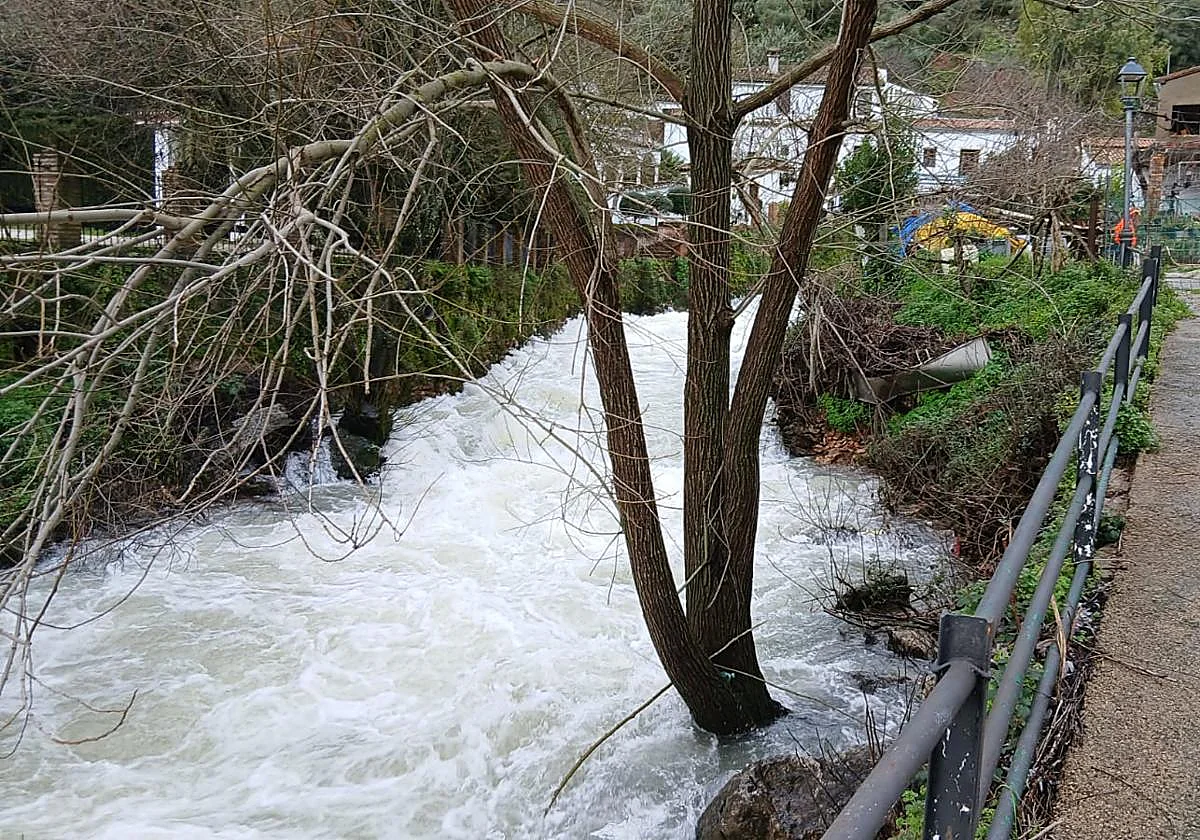
Recent studies in Benaoján and Jimera de Líbar reveal the natural drainage capacity of the region's karst systems following the 'Leonardo' storm
Friday, 13 February 2026, 14:57
The underground systems of the Serranía de Ronda are proving to be more resilient than previously thought.
Following the intense rainfall brought by the 'Leonardo' storm, which led to the preventative evacuation of Benaoján Station earlier this month, experts have discovered that the local cave networks are playing a vital role in managing water levels and preventing even greater surface damage.
The complex karst topography of the Guadiaro valley, particularly between the municipalities of Benaoján and Jimera de Líbar, has been under intense scrutiny by geologists and civil protection experts. The objective was to determine how these ancient limestone structures reacted to the sudden, massive influx of water that threatened to overflow the Montejaque dam.
A natural drainage system
Contrary to initial fears that saturated underground galleries would exacerbate surface flooding, data shows that the caves are "protecting the area better than predicted." The network of sinkholes and subterranean rivers acted as a natural buffer, absorbing a significant portion of the runoff before it reached the main riverbeds.
This "natural sponge" effect is particularly evident in the Hundidero-Gato system. While the volume of water was historic, the speed at which the underground aquifers managed the pressure prevented a catastrophic surge in the lower reaches of the Guadiaro.
Safety and future planning
Local authorities in Benaoján and Jimera de Líbar are now looking to integrate these findings into future emergency protocols. The fact that these caves can mitigate the impact of extreme weather events provides a glimmer of hope for a region increasingly concerned about climate volatility.
However, experts warn that while the caves are resilient, the surrounding infrastructure remains vulnerable. The recent evacuations at Benaoján Station served as a reminder that surface water management must work in tandem with the natural subterranean drainage.
For residents and the local caving community, the news is a testament to the hidden strength of the Serranía’s landscape. The focus now shifts to further mapping these "protector" caves to better understand their limits during future meteorological events.