Zoom
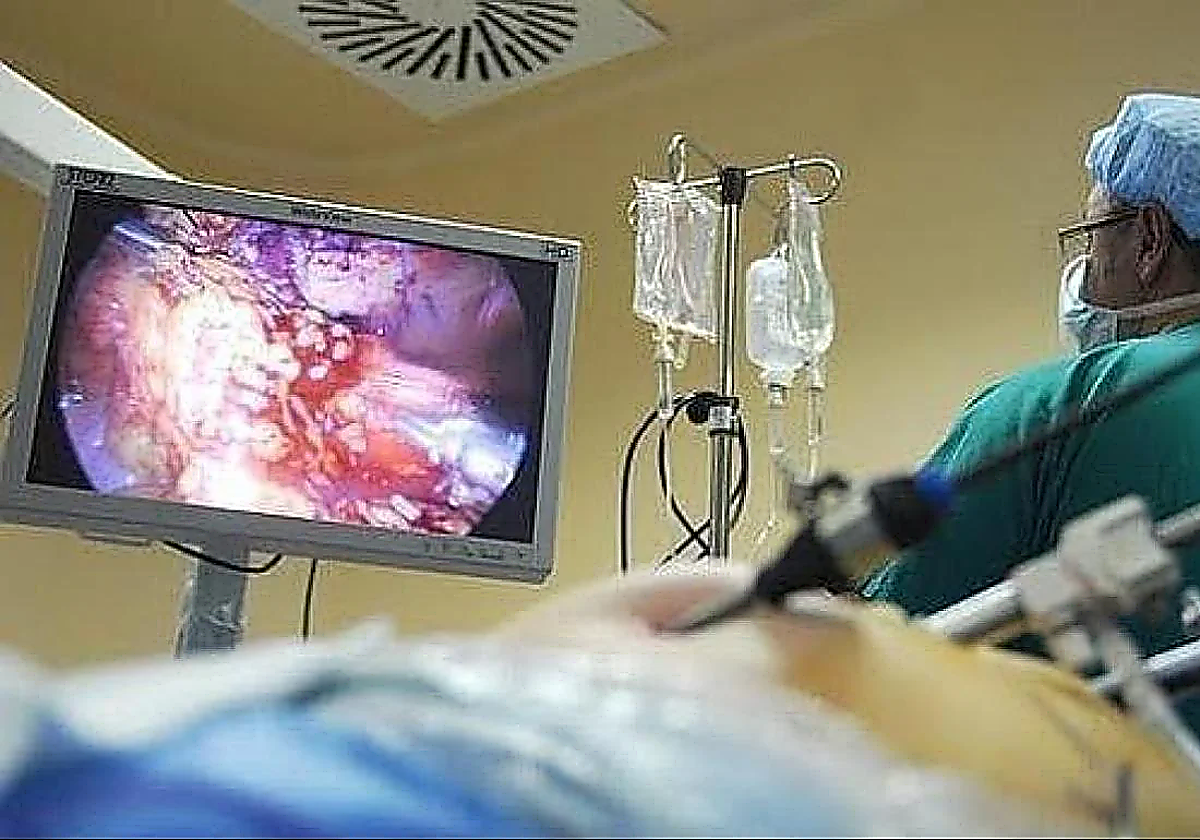
Photo from a colonoscopy. SUR Health Seven out of ten Malaga residents do not respond to invitation for colon cancer screeningColon tumours can be cured in 90 per cent of the times, if detected in the early stages or as premalignant lesions, hence the importance of going to the appointment
José Antonio Sau
Monday, 30 March 2026, 10:43
The Andalusian regional government's colon cancer screening programme has detected a total of 3,833 adenomas (polyps or potentially cancerous lesions, although not all of them develop into cancer) and 116 cancers since its launch in 2014.
Despite this progress, the biggest challenge is public participation. According to head of the regional government Juan Manuel Moreno, participation has increased from 20 to 40 per cent, which still leaves "60 per cent of people not responding" to the invitation for an appointment.
The rate in Malaga province is even lower, with only 28.68 per cent of the people who receive a letter actually attending the screening. Malaga is the province with the worst performance in this regard: seven out of ten residents did not participate in 2024, which is the last year with available data. Sources from the Andalusian health service (Sas) have confirmed to SUR that, as of March 2026, this proportion remains the same.
The colorectal cancer screening program in Malaga now reaches a target population of 507,588 people, of whom 502,060 are eligible. The target population includes all residents of Malaga between 50 and 69 years of age who are eligible for this mass screening program. The eligible population is calculated by subtracting from the target population those individuals who have recently undergone a colonoscopy or have a high genetic risk. To date, 495,948 invitations have been sent, representing 98.78 per cent coverage of the eligible population.
Letter invitation
To invite the eligible population to an appointment, Sas sends a letter so that recipients can give a stool sample to their local health centre.
According to healthcare experts, colon cancer can be cured in 90 per cent of cases if detected in its early stages or as premalignant lesions. In the short term, this early detection reduces mortality by between 30 and 35 per cent.
"Colon cancer screening involves inviting all Andalusians in that age range to take a simple, painless test that analyses the presence of blood in stool. If the result is positive, they receive an appointment with their health centre, which informs them of further tests. The next step is a colonoscopy, if necessary," Sas says.
Prevention
The regional ministry of health highlights that prevention is the best tool for maintaining good health. Early detection of colon cancer can make a significant difference. The test that the letter sent to the eligible population recommends can save lives. "Reading it and following its instructions can be the first step in detecting colon cancer early," the regional government says.
In addition to early diagnosis, improving lifestyle is crucial to reducing the likelihood of developing the disease. Risk factors include being overweight or obese, consuming alcohol, tobacco, red and processed meats and having diabetes. Protective measures include moderate physical activity and a diet low in fat and rich in vegetables, fruit and fiber.
It's going to grow
Head of oncology at HM Hospitales in the province Dr Javier Díaz Santos says that colon cancer can comprise several diseases: "one is rectal cancer, which behaves differently from what would be colon cancer purely as such, which is the large intestine up to the last part, the rectum". Dr Díaz also says that the behaviour of one part of the colon differs from that of another.
According to the Spanish society of medical oncology (Seom), colon cancer is the cancer "expected to grow the most and be diagnosed the most this year", with an increase of between five and ten per cent. Malaga province detected around 1,400 cases in 2024.
Dr Díaz warns that, in recent years, doctors have been increasingly detecting colon cancer in people "under the age of 50, even at 40". "We need to delve deeper not only into diagnosis, but also into prevention and early detection," he says.
Dr Díaz says that one of the ways people can contribute to early detection is by paying attention to their bowel habits. "If constipation alternates with diarrhea, that's a warning sign." Other abnormal signs are "blood or mucus" in the stool, as well as unintentional weight loss that "persists over time", fatigue and weakness.
The advice of the healthcare system is for residents to book appointments if they notice symptoms or if they receive the letter. Each person has a different risk, which is why it's crucial for everyone to keep an eye on their well-being and bowel movements. In some cases, if there is family history or other risk factors, a colonoscopy might provide a clearer picture than a simple test.
New treatments such as immunotherapy can significantly help in diagnosed colon cancer cases. Even in the case where the cancer has metastasised, survival can reach 20-something months. "Furthermore, this treatment increases the survival rate of 'long responders'," Dr Díaz says.