Zoom
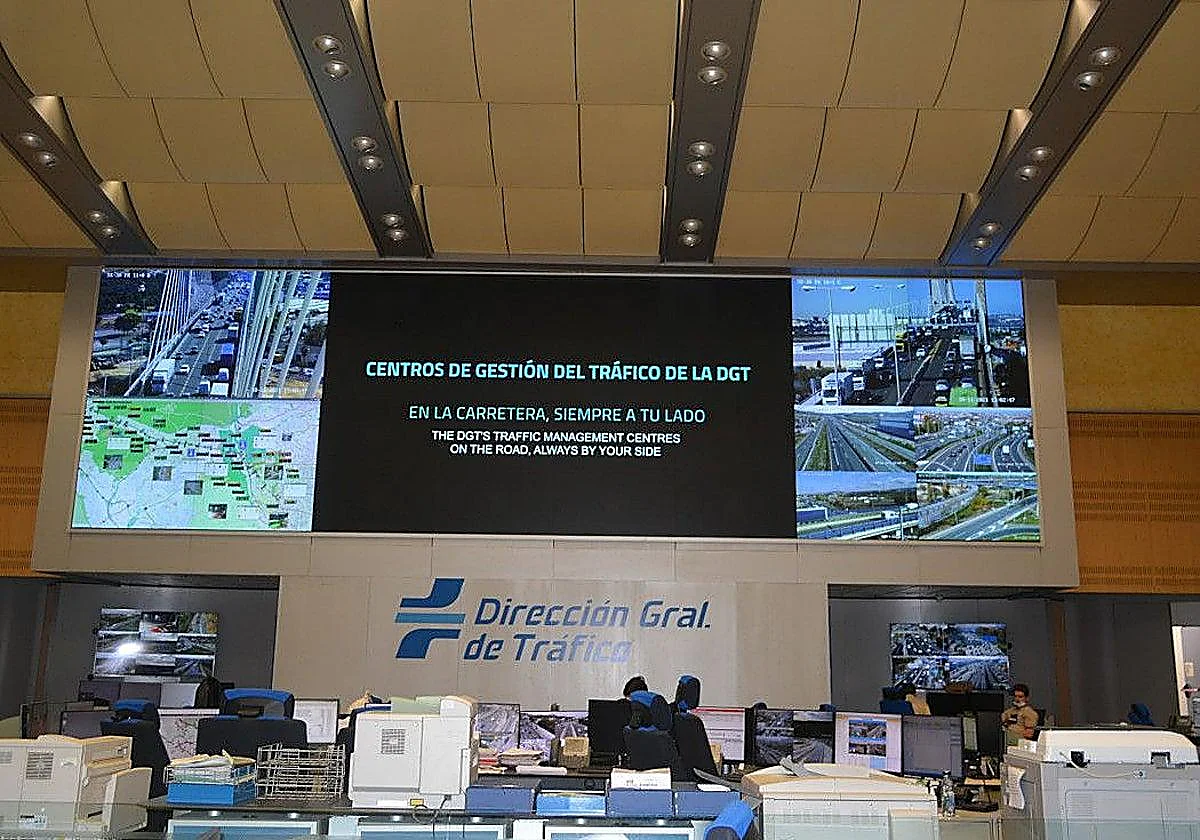
DGT traffic control centre DGT.es Traffic Spain Easter: traffic authorities forecasts 17 million journeys during Semana SantaThe DGT has set up two operational phases to manage the flood of vehicles on national roads
Patxi Fernández
Friday, 27 March 2026, 13:03
Spain's traffic authority (DGT) forecasts that there will be more than 17 million long-distance road journeys this Easter. This great national exodus officially starts at 3pm on Friday, 27 March, and lasts until midnight on Monday, 6 April - a public holiday for the Balearic Islands, Castilla-La Mancha, Catalonia, the Basque Country, La Rioja, Navarre and Valencia.
To manage the flow of vehicles, the DGT has set up a special operation in two phases. The first involves the first weekend, from this Friday afternoon until midnight on 29 March (Sunday), with a forecast of 4.3 million road journeys.
The second phase runs from Wednesday, 1 April, to Monday, 6 April.
According to the DGT, safety is the central focus of this operation, especially after 27 people died in 26 road accidents in Spain last Easter. The main focus is on motorcyclists, as eight of the deaths last year involved motorcyclists.
The DGT urges the population to follow traffic rules at all times.
Among the technological innovations of 2026, the consolidation of the V-16 beacon light stands out. Since 1 January, it has been mandatory to use this flashing light in the event of an incident to warn other road users. Its importance lies in its connectivity, as the DGT 3.0 platform receives an average of 2,700 incident reports daily through these devices, allowing for virtual alerts to other drivers via navigation systems and road message signs.
The 011 information hotline has also recently been upgraded with artificial intelligence and natural language processing capabilities. These improvements allow for the automatic transcription of calls, the identification of common non-technical terms and the analysis of the user's emotional state to optimise the service.
The system now provides assistance in Spanish, English, Catalan, Galician and Basque and has expanded the subcategories of incidents to include fires and floods.
Regarding enforcement resources, the DGT has the full availability of its traffic management officers. Compliance with traffic regulations will be monitored using fixed and mobile speed cameras, cameras to check for seatbelts and mobile phone use and aerial surveillance of the roads daily.
To ease traffic flow at the busiest points, authorities will set up reversible and additional lanes using signs and cones. Although these measures improve overall circulation, the DGT acknowledges that drivers travelling in the direction that loses a lane may see them as a disadvantage, so it has strengthened alternative routes, which are available on its website.
Additionally, roadworks will be suspended, sporting events will be limited and lorry traffic will be restricted on specific sections of road and at specific times.
The DGT calls for the early planning of trips, which can benefit from the traffic authorities' official channels @informacionDGT and @DGTes, the radio and television news bulletins, which provide updated information.
The most important traffic advice remains: do not consume alcohol or drugs before driving, respect speed limits and avoid distractions such as mobile phone use.