Economy
Spain economy: Unicaja earns 161 million euros in first quarter and plans 95% dividend payoutThe bank improves net interest income despite lower official rates
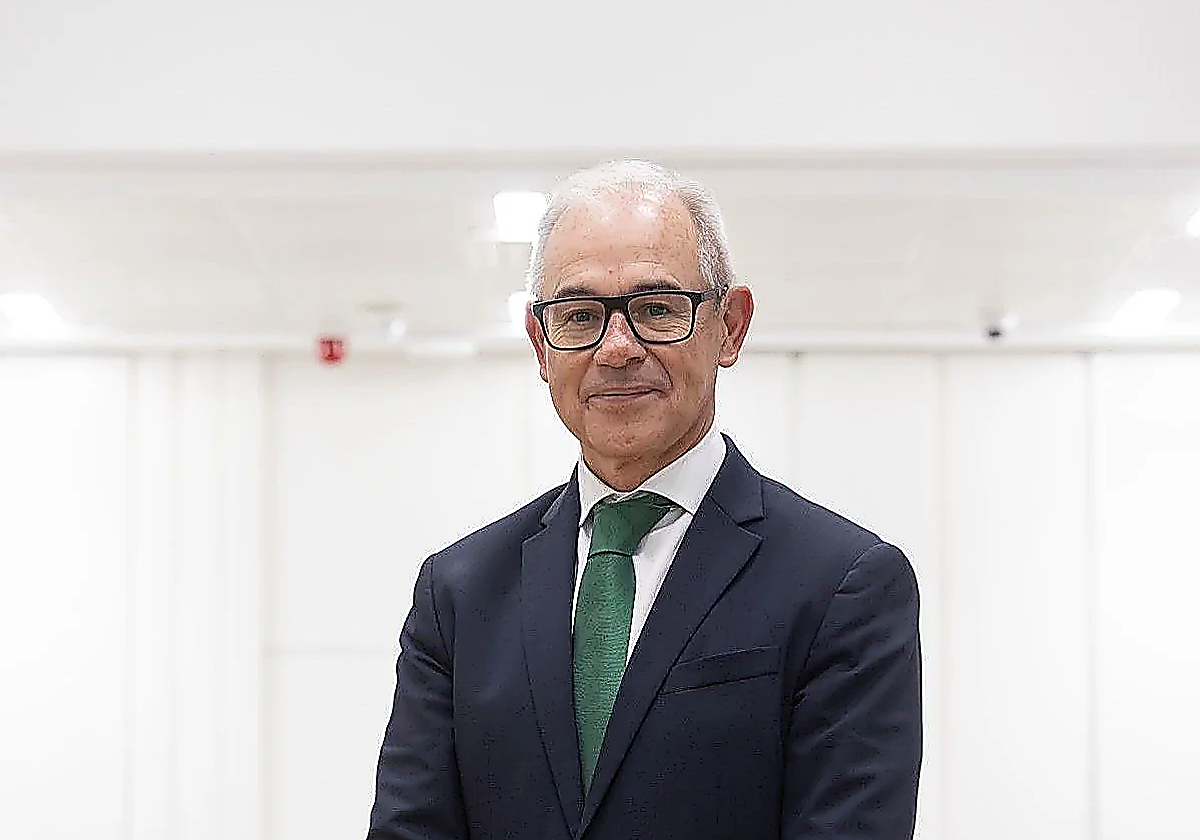
CEO of Unicaja Isidro Rubiales. (SUR)Cristina Vallejo
05/05/2026 a las 13:08h.Unicaja earned 161 million euros in the first quarter of the year, broadly in line with the same period in 2025 (up 1.4%). The result rests on net interest income (the difference between what the bank earns on loans and what it pays depositors), which rose 1.3% to 373 million euros.
Interest income, however, fell by 6.3% year-on-year in the period, but expenses dropped more sharply, down 17.8% to just under 200 million. In both cases, the trend reflects the European Central Bank's rate cuts, although the bank managed to cushion the fall in income and offset it with a bigger reduction in funding costs.
Further down the income statement, gross income grew by around 1% year-on-year to 520 million. Within this, net fee income stood out, rising 3.1% to 136 million. The bank says this reflects a gradual shift in its revenue mix towards higher value-added businesses such as wealth management, insurance and investment funds. Income from equity-accounted investees also contributed 19 million euros, although that figure was 12.9% lower than a year earlier.
Next comes operating profit, which fell by 2% to 275 million after deducting costs, with administrative expenses (including staff costs) the largest component. These rose 4.5% to 222 million, of which 145 million corresponded to personnel costs, up 2.5% year-on-year.
However, operating income again delivered a positive comparison, increasing 1.2% to 230 million euros, helped by a 20% reduction in provisions compared with the previous year.
After tax of 71 million euros (up 3.1%), net profit reached 161 million, 1.4% higher than in the first quarter of 2025.
Almost all profit will go towards dividends
In a statement to Spain's stock market regulator (CNMV) on Tuesday, the bank highlighted the solid performance of recurring income alongside steady growth in commercial activity. It also pointed to gross income's ability to absorb part of the rise in operating costs, mainly linked to investments under its strategic plan.
Within this framework, Unicaja has approved a new dividend policy effective from January 2026. It raises the payout ratio from 60% to 70% and, for the current year, includes an additional remuneration, either via share buybacks or cash payments, of around 25% of profit. This would lift total shareholder remuneration to 95%.
The Malaga-based group posted a record profit of 632 million euros in 2025. At the shareholders' meeting on 9 April, CEO Isidro Rubiales predicted that 2026 earnings would exceed that figure, reaching another all-time high in earnings.
With this, the bank estimates it will achieve a profit of 1.9 billion over the three-year period from 2025 to 2027, which the current strategic plan covers, revising up its earlier forecast of 1.5 billion.
The non-performing loan (NPL) ratio stood at 2% at the end of the first quarter, down 0.6% year-on-year. The coverage ratio rose nearly to 79.9%, while coverage of foreclosed real estate assets reached 77.2%, up from 76.1% a year earlier. The bank attributed this to a reduction in doubtful and foreclosed assets and a prudent provisioning policy.
Solvency indicators also improved. The high-quality capital ratio reached 16% of risk-weighted assets, up 0.5% year-on-year. According to the bank, this implies a capital surplus of 7.3% over regulatory requirements, equivalent to more than 2.2 billion euros.
Growth in investment funds
On the balance sheet, retail client funds exceeded 96 billion, up 3.9% year-on-year, although slightly lower than at the end of 2025. Client deposits approached 70.1 billion euros, a 1.6% increase, driven mainly by demand deposits, while term deposits declined.
Stronger growth came from off-balance-sheet assets under management, which reached 25.91 billion in March 2026, up 10.6% year-on-year. Investment funds led the increase, rising 17.2% to more than 16.9 billion. Industry body Inverco places Unicaja's market share in investment funds at 9%, supported by net inflows of 468 million during the quarter.
Total lending stood at 47.62 billion euros at the end of March, up 2.4% year-on-year and 0.8% compared with the end of 2025. The increase was driven mainly by corporate lending, which grew 6.3% to 10.28 billion, with large companies accounting for more than 6.6 billion, up nearly 10%.
Loans to individuals remained the largest segment, exceeding 32.6 billion, up 1.2% year-on-year. Mortgages accounted for the bulk, at more than 29.2 billion, a 0.4% increase.
New lending in 2026 totalled 2.845 billion, of which 913 million corresponded to mortgages for individuals, representing 32% of the total.
Unicaja partly attributes this performance to the growth of its digital channel, which is gaining ground in consumer lending and investment fund distribution. Digital sales rose 82% in consumer finance and 47% in funds compared with the first quarter of 2025.