Health minister Mónica García said new measures were being considered to reduce judicial delays that can prolong end-of-life suffering
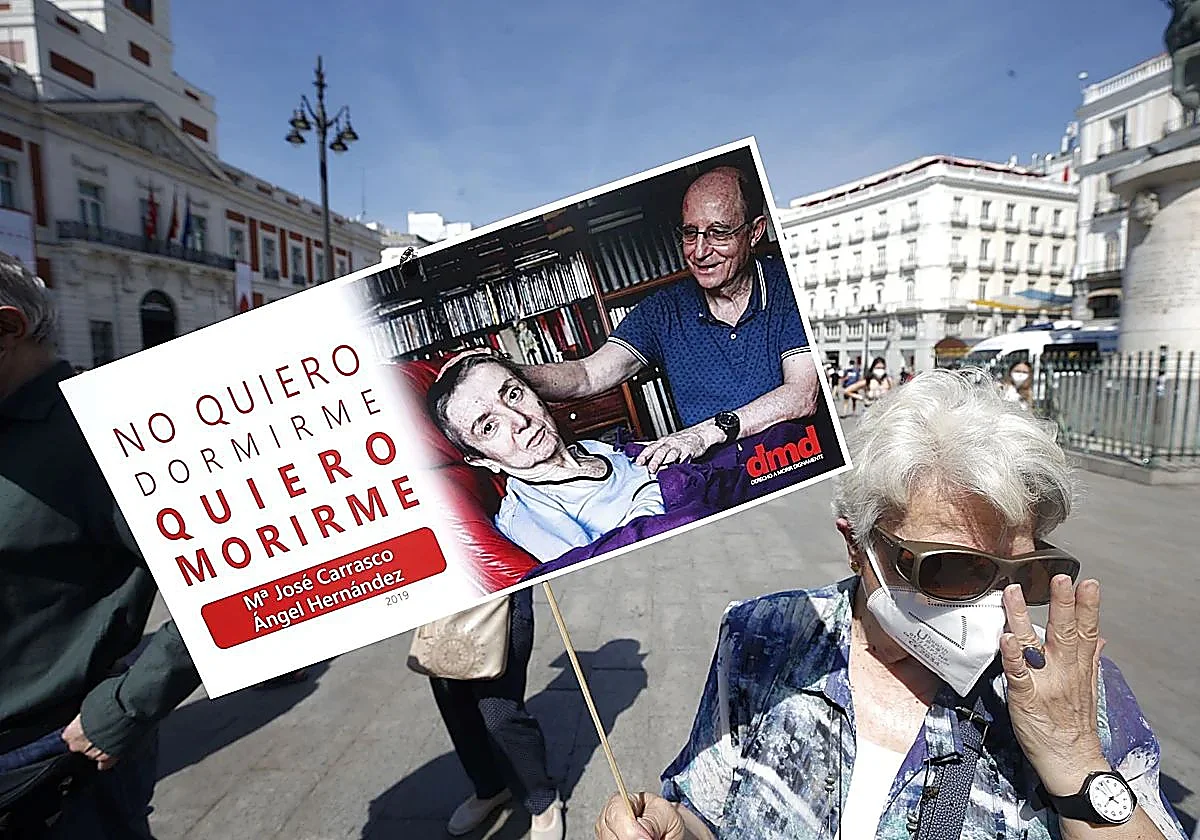
Añádenos en Google A woman protesting in favour of euthanasia in Madrid. (EFE)Madrid
17/06/2026 a las 16:35h.Spain's Ministry of Health is examining new measures aimed at preventing court proceedings from delaying access to euthanasia, after officials warned that legal challenges ... can unnecessarily prolong suffering even in cases already approved under existing safeguards.
Health minister Mónica García said the government was reflecting on how to better protect the right to assisted dying from delays and judicial processes, citing recent cases such as that of Noelia Castillo in March. She said debates in recent months had highlighted the need to reduce obstacles that can extend the process after approval.
García also defended the framework, saying the law "works and has guarantees and legal security", while setting out priorities to reduce regional disparities, strengthen professional training, improve public information and ensure equal access across Spain.
565 cases in 2025
Official data published by the ministry show that 565 people received assistance to die in 2025. This represents 0.13 per cent of all deaths recorded in the country, equivalent to around one in every 750 deaths.
Since the law came into force five years ago, 1,668 people have used it and 3,716 requests have been registered, including 1,284 in 2025.
Regional differences remain significant. Catalonia recorded the highest rate of applications at 6.14 per 100,000 inhabitants, followed by Navarre at 5.41 and the Basque Country at 5.13. La Rioja, the Balearic Islands, Cantabria, Asturias and the Canary Islands also exceeded the national average of 2.61 per 100,000.
The ministry report again highlights a mismatch between conditions cited in applications and those most associated with approved cases. Cancer accounts for 37 per cent of initial requests, while neurological conditions are the leading cause among completed cases, representing 46 per cent compared with around 30 per cent for cancer.
In total, neurological conditions make up 31 per cent of applications, placing them behind cancer at the request stage but ahead among final authorisations.
Spain’s assisted dying rate remains well below that of other countries with similar legal systems. The mortality rate is 0.13 per cent compared with 5.96 per cent in the Netherlands, 5.10 per cent in Canada and four per cent in Belgium.
In absolute terms, Spain’s 565 cases in 2025 compare with 16,499 in Canada and 10,341 in the Netherlands.