Education
Spain's schools will lose 600,000 students over the next decadeThe decline in the birth rate will reduce enrollment by 400,000 students in primary and 376,000 in secondary schools, with an increase only in preschool and Master's degree education
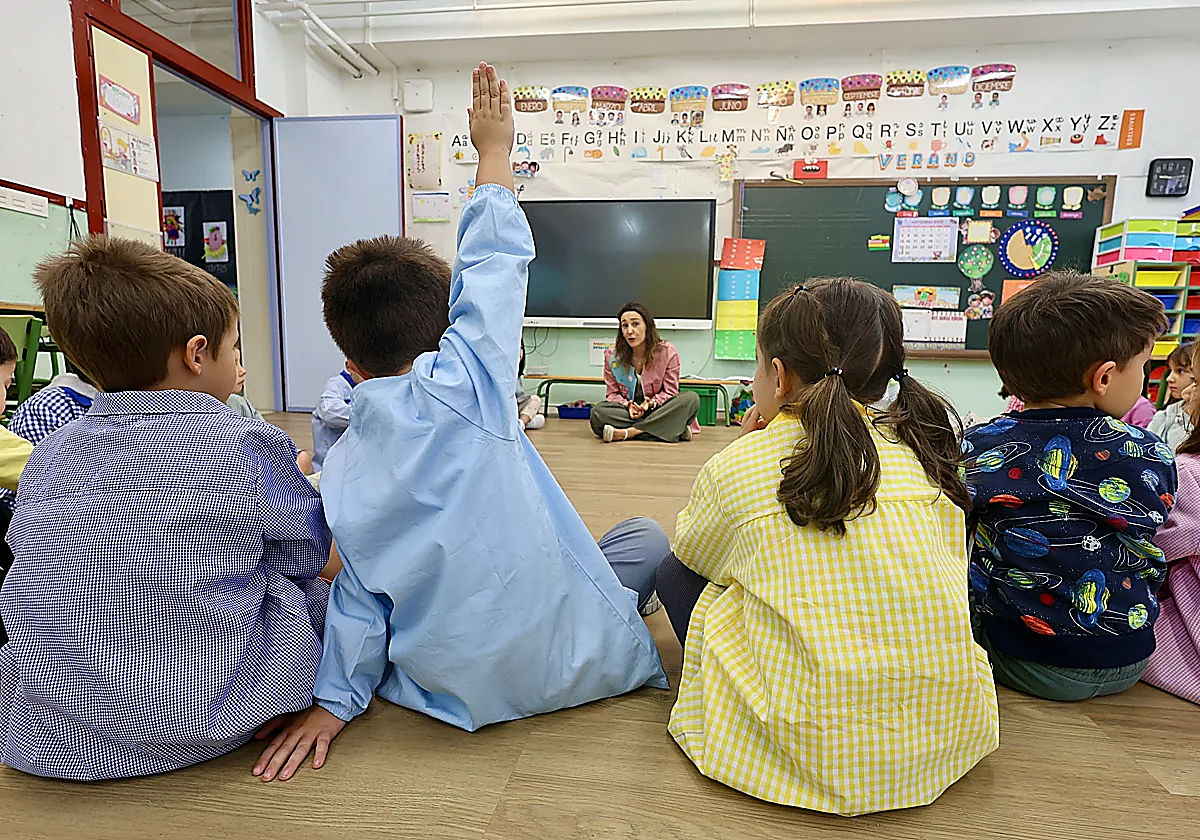
Children in the classroom of a Spanish school. (C. ESPESO)Alfonso Torices
Madrid
28/04/2026 a las 15:04h.The gradual but consistent decline in Spain's birth rate over the past 15 years will cause a seismic shift in schools across all educational levels over the next decade. Spanish classrooms, excluding vocational training centres, will lose just over 600,000 students between now and 2035, with a particular impact on primary and secondary education, according to a study by the Ramón Areces and Sociedad y Educación associations.
Among the report's most significant predictions is that primary education (ages six to elevent) will lose nearly 400,000 students between 2025 and 2035, while secondary education (ages 12-15) will experience a cumulative decline of 376,000 students, particularly pronounced from 2030 onwards. These stages will be the most impacted by the declining birth rate, although upper secondary education (ages 16-17) will also see a reduction of over 150,000 students.
According to the report, pre-university education will face "increasingly empty classrooms", forcing a rethinking of the organisation of schools, staffing and infrastructure.
Two exceptions
Not all educational stages will see a decline. The analysis identifies two clear areas of growth. On the one hand, the first stage of early childhood education (newborns to two years of age) expects continued growth in demand for places due to social, labour and family changes, reaching enrollment rates close to 70 per cent by 2035.
The second exception is university campuses, which will experience a boom in Master's programmes and temporary, but only fleeting, growth in undergraduate studies. While Master's studies will maintain sustained expansion throughout the decade, with an increasingly adult student body committed to lifelong learning, undergraduate programmes will grow by around 183,000 students by 2030, before entering a subsequent adjustment phase with a loss of 60,000 students by 2035, due to the influx of younger, smaller cohorts into universities.
Different rates of change
One of the report's key strengths is that it breaks down the demographic impact by region across the various stages of education, providing results at national, regional and provincial levels for most of the educational programmes. This shows that the decline will not be uniform and that regions with very different trends will coexist.
Among the most notable regional findings, it indicates that Madrid and Catalonia, although they will lose many pupils in absolute terms, will retain greater demographic dynamism. The regions of Valencia and Murcia will show greater resilience to the decline, while Almeria stands out as a singular exception, with growth even forecast for upper secondary education. At the same time, Galicia, Asturias and Extremadura are among the areas that will experience the greatest structural decline.