Ver 9 fotos
Adobe stock Environment The Doñana we knew may never return: Why a wet winter isn't enough to save the Andalusian national parkAs record bird numbers return to the ecologically vital marshes, SEO/BirdLife warns that only radical shifts in water management can protect the reserve's long-term survival
Erin Fisher
Malaga
Monday, 27 April 2026, 15:46
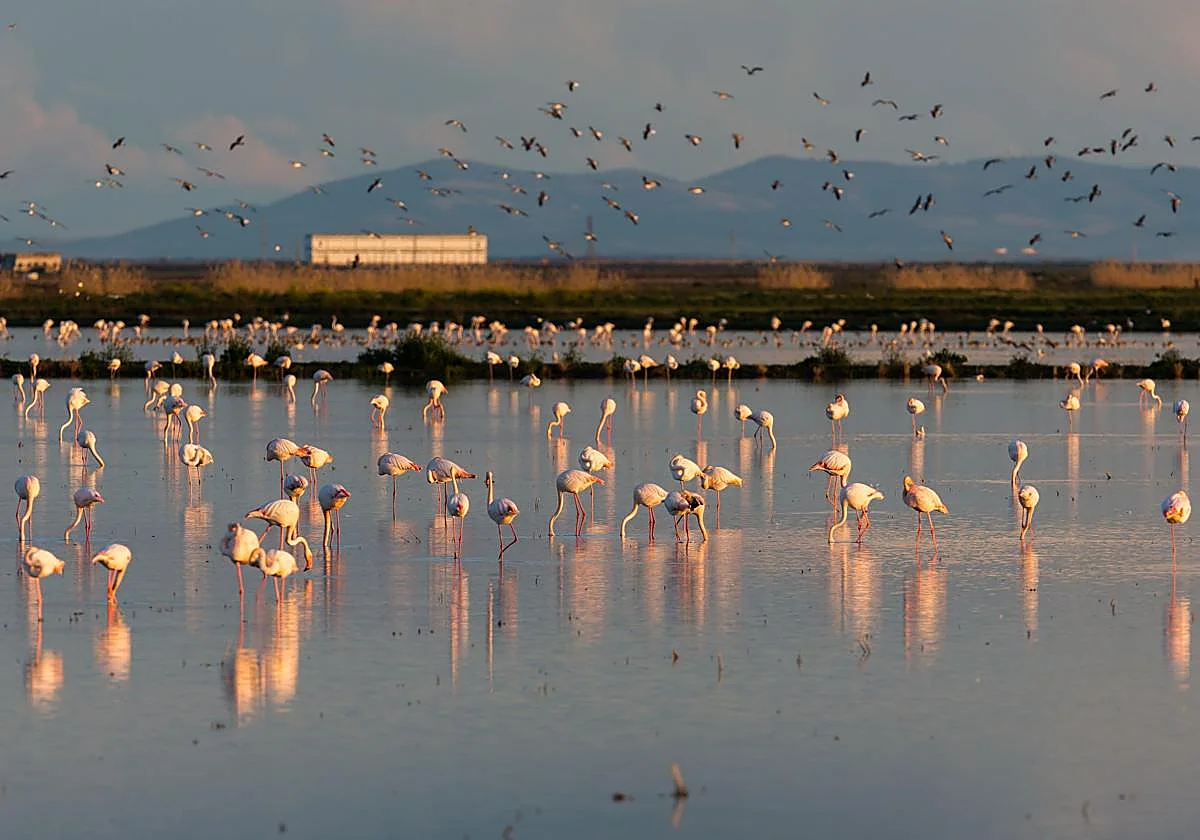
Heavy rainfall over winter means that Doñana Park’s marshes are full once again. The hugely important Mediterranean wetland has seen birds and colour come flooding back after the dry season.
The latest census recorded 385,649 birds of 88 species in January, the best figures in years, alongside other welcome news such as a rise in Iberian Lynx cubs, as well as a positive wintering season for ducks and flamingoes. To an untrained eye, it might seem like the park has bounced back to normal.
However, spokesperson for SEO/BirdLife Carlos Dávila’s expert eye offers a more sobering reflection on the park's future, warning that this is just a brief respite for the park and deeper issues remain which can’t be ignored.
“I believe the Doñana we once knew will never return,” he told Sur in English. He blamed decades of aquifer overexploitation, water contamination and the rising climate crisis, all which have altered the park in ways that a good winter is unable to reverse.
Dávila believes that the focus should now be shifted from complete reversal to adaptation, to create a new model in order to protect what can still be saved, he stated that, “we need to accept the question of 'what Doñana can we have'?"
Far from a defeatist attitude, this is rather a call to action, a plea to reframe the way we respond to the park’s crises.
Doñana, situated mainly in Huelva, but with parts in Seville and Cadiz, remains one of Europe's most important wetlands, a UNESCO World Heritage Site since 1994 and a critical stopover for birds migrating between Europe and Africa.
The crisis:
Overexploitation: The aquifer is being drained at 120% of its natural recharge capacity.
Vanishing Water: 59.2% of the park's permanent pond network disappeared between 1985 and 2018.
The "Heat Sponge": Climate change impacts in Doñana are 20% more severe than the global average, accelerating water loss through soil evaporation.
Ecological Shift: Invasive species like the American red crayfish and blue crab are displacing native wildlife as habitats change.
Under the surface
The root of Doñana’s issue comes from deep underground, during seasons of drought it is almost entirely dependent on an aquifer - a system found below the wetlands that acts as a sponge to store water for the springs and wells.
However, these materials have been overexploited for decades and drawn upon at more than 120% of its natural recharge capacity. Dávila explained that, “Even if rainfall is abundant, if overexploitation continues, Doñana will not recover ecologically”, citing intensive agriculture and mass tourism at the nearby Matalascañas resort as principal exploiters of the resources.
Doñana by numbers:
385,649: Waterbirds recorded in the January 2026 census.
13 Years: The length of the record-breaking drought that finally ended in 2025.
-50,000: The decline in wintering Greylag geese compared to historical averages.
6: New Iberian lynx kittens born this March at the El Acebuche breeding centre.
88: Different bird species currently utilizing the restored marshes.
Dávila also warned that, “the effects of climate change in this area are up to 20% greater than in the rest of the world, in the form of more intense and recurring droughts”. These droughts are worsened further by climate change fuelled phenomena known as evapotranspiration, a process in which heat draws water out of the soil before it can percolate down to recharge the aquifer.
Related story