Zoom
Añora. SUR Travel The 'Irish' village of Spain: why this Córdoba municipality has the highest concentration of redheadsAñora stands out for having one of the highest concentrations of redheads in Spain: they account for as much as 15% of the population, a figure comparable to that of Ireland
Alekk M. Saanders
Cordoba
Monday, 16 March 2026, 10:51
Contrary to the widespread misconception, redheads have existed in Spain since ancient times. The so-called ‘pelirrojos’ make up approximately 1% to 3% of the population. They are most common in the northern regions, such as Galicia, Asturias and the Basque Country, which can be explained by their Celtic and Viking origins. This list is topped by by Andalucia, thanks to the village of Añora, where a surprisingly high proportion of the population – between 10 and 15 per cent – has red hair.
Common Celtic ancestors
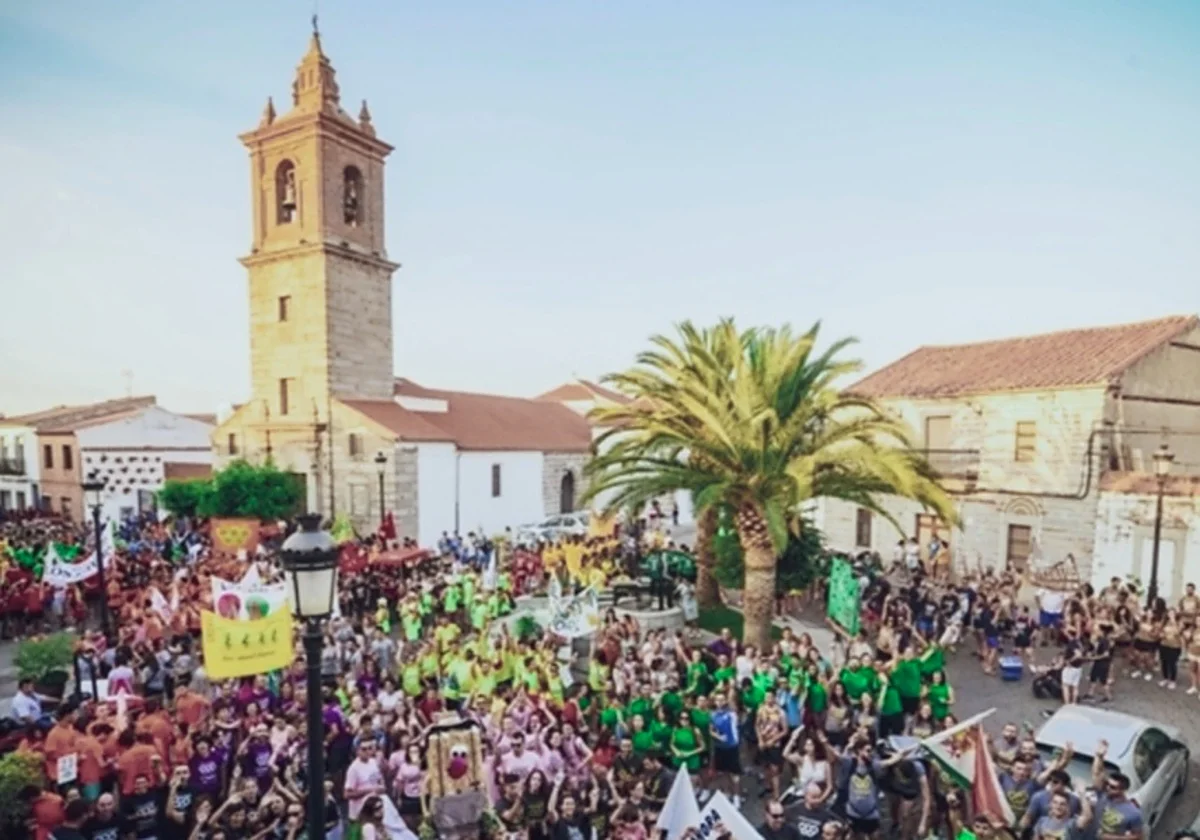
Añora is a charming Andalusian village situated in the north of the province of Córdoba, in the Los Pedroches region. It was founded in the late 14th century and granted town status in 1553. Surrounded by pastures dotted with holm oaks, the village stands out from the rest thanks to its unusual houses, built from granite blocks, and its distinctive inhabitants. In Añora there are redheads in almost every family.
Why are there so many redheads in this part of Spain?
Out of Añora's 1,500 residents, nearly 150 defy the stereotypical image of Córdoba’s population. This concentration makes the village genetically unique in Spain and has given rise to several theories:
The Celtic migration: A popular hypothesis suggests that centuries ago, Celts travelled from modern-day Ireland to northern Andalusia.
The Flemish settlement: Some historians attribute the trait to Charles I of Spain (originally from Flanders), who settled northern Andalusia with immigrants from Central Europe in the 16th century to industrialise the region. This would explain the presence of Germanic or Visigothic features.
Local lore offers more colourful explanations for why the MC1R gene is concentrated specifically in Añora rather than the wider region:
'La Cura' (The Priest): Residents often attribute the red hair to a specific ancestor who was a priest. To this day, a redhead in town might affectionately be called hija/o de cura (son or daughter of the priest)—the local equivalent of "ginger".
The captivating Irishman: One anecdote tells of a red-haired Irishman who passed through the village and captivated many with his unusual appearance and charm.
Social isolation: Historically, marriages between different villages were often frowned upon. This meant the redhead gene stayed concentrated within Añora’s borders rather than spreading across the province.
Of the 1,500 inhabitants, nearly 150 are the complete antithesis of the stereotypical image of Cordoba people. Such a concentration of redheads in such a small area makes this village genetically unique in Spain and gives rise to numerous theories, hypotheses, legends and even jokes.
Such a concentration of redheads in such a small area makes this village genetically unique in Spain and gives rise to numerous theories, hypotheses, legends and even jokes
A popular hypothesis, which suggests that many centuries ago the Celts travelled all the way from what is now Ireland to the north of Andalucia, including the northern part of the province of Málaga, is often cited as an explanation for the high concentration of this gene (MC1R) in Añora.
However, some historians attribute the red hair of today’s Andalusians to the king who reigned in the 16th century. Charles I of Spain (who was originally from Flanders) settled areas of northern Andalucia with immigrants from Central Europe, with the aim of industrialising the region and introducing new methods of agricultural development. So this fact is cited as a possible explanation for such a striking manifestation of Germanic or Visigothic features in the region.
From a priest to an Irishman
However, these theories cannot explain why the proportion of redheads is high not across the region as a whole, but in this particular village. Añora residents attribute the redheads in the village to ‘La Cura’ - an ancestor who was a priest. That is why any redhead might affectionately be referred to as the priest’s son or daughter. ‘Hija/o de cura’ is a sort of the local equivalent of ‘ginger’.
Incidentally, among the anecdotes, one with an Irish connection can be found. In Añora you may be told a story about a certain red-haired Irishman who happened to find himself in the village, and who apparently captivated many with his unusual appearance and charm. The fact that, in the past, marriages between people from different villages were frowned upon in the local villages meant that redheads did not spread very far beyond Añora.
More than welcome
Incidentally, when searching for information online, Añora is described as ‘Andalusian Ireland’. Unsurprisingly, such a ‘nickname’ prompts some Irish people to get to know their ‘compatriots’ better. For example, one red-haired blogger from Ireland shared her experience of visiting the village.
Whilst strolling through the village streets, she was surprised when a local woman told her without hesitation: “You’re from Añora.” Such rapid “naturalisation” might be considered as… a need. In fact, the number of redheads in Añora is dwindling, and as one local remarked, preserving this authenticity will require a helping hand from outside. After all, many areas along that Andalusian coast have become noticeably more blonde thanks to the influx of newcomers from northern countries. So why not, if foreigners with red hair who appreciate peaceful countryside with beautiful scenery choose Añora to find their second home and even feel there right at home.