Health
The Malaga doctor leading pioneering cancer treatment for childrenAlfonso Alba Bernal, from Rincón de la Victoria, is currently doing postdoctoral research with the paediatric oncohematology group at La Paz University Hospital in Madrid
Añádenos en Google Alfonso Alba Bernal. (SUR)José Rodríguez Cámara
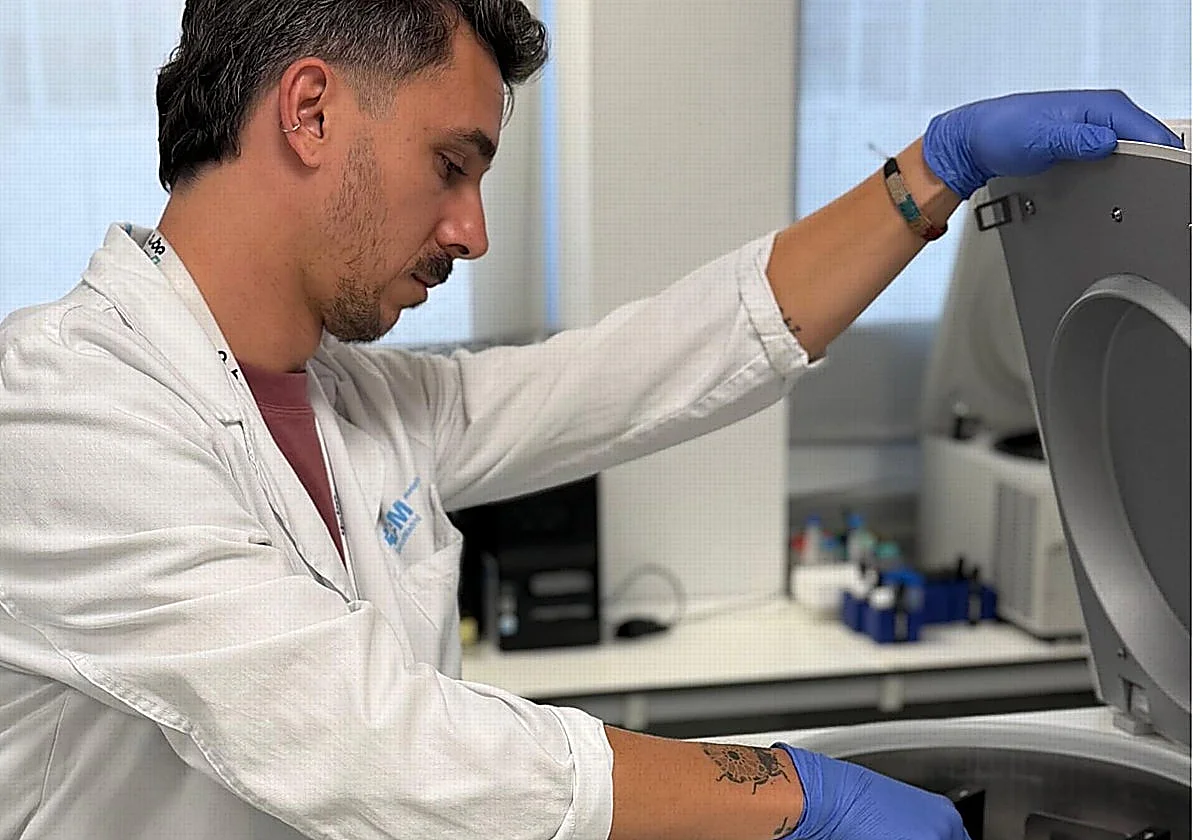
30/06/2026 a las 13:50h.Alfonso Alba Bernal from Rincón de la Victoria on the eastern Costa del Sol is leading pioneering treatment for rare childhood cancers. He is currently doing postdoctoral research with the paediatric oncohematology group at La Paz University Hospital in Madrid.
Alba Bernal is leading a project to find a solution for those who suffer from rhabdoid tumours, alongside a highly qualified team and in collaboration with Antonio Pérez Martínez, head of the Pediatric Hematology-Oncology Department at La Paz.
"They are rare, almost always appear in the first years of life and are very aggressive. They have different locations, from those in the brain, known as atypical rhabdoid teratoid tumours, to those that arise in the kidney or liver. The latter are called extracranial malignant rhabdoid tumours," explains Alba Bernal.
Treatment is currently based on surgery, chemotherapy and when possible, radiotherapy. "But it's insufficient and carries significant side effects for such young children. The problem is that we don't have specialised treatments for these types of tumours and with current therapies, only 20 per cent of those who suffer from them survive more than five years," Alba Bernal explains.
Aggressive
"What makes them so complicated is, in part, their genetic simplicity: unlike other cancers full of mutations, rhabdoids depend primarily on the loss of a single gene, which makes them aggressive and difficult to treat," he points out.
But, he says, this same lack of complexity "raises an interesting question for those seeking to treat them: if the tumour displays recognisable signals on its surface, can the patient's own body be trained to find them?"
Under this premise, the research team is working to apply CAR-T therapy. “Our immune system has cells called T lymphocytes that function like patrols: they go around the body looking for anything that doesn't fit in and eliminate it. The problem with many tumours is that they go undetected. The patrols don't see them. CAR-T therapy, which stands for Chimeric Antigen Receptor T-cells, involves taking T lymphocytes from the patient, taking them to the laboratory, and adding a new receptor to them through genetic engineering,” the researcher explains.
It is “like a pair of custom-made glasses,” he illustrates, since he says “it makes the lymphocyte recognise a specific signal that the tumour carries on its surface". Alba Bernal goes on to explain that "these trained cells then multiply and are returned to the patient so they can find the tumour and attack it".
Courage
The researcher adds, "It's a strategy that has already changed the prognosis for some childhood leukemias. Applying it to solid tumours like rhabdoids is much more difficult and that's precisely where the team at La Paz is working."
In the laboratory of the Madrid hospital Alba Bernal, along with his colleagues, is designing and testing CAR-T cells directed against signals present in rhabdoid tumours. The team is part of the CRIS unit for advanced therapies in childhood cancer.
"This is a project born thanks to the courage and generosity of Sara, the mother of Manuel who died from one of these tumours; she transformed part of her grief over her son's death into strength, raising funds to create a specific research line for this type of tumour," Alba Bernal explains.
The researcher hopes to develop new CAR-T therapies for use both individually and in combination with targeted drugs to increase the effectiveness of these treatments for rhabdoid tumours. "Currently the studies are being carried out in cell lines, so there is still a long way to go before reaching clinical trials with patients. However, high-quality preclinical research is essential to increase the chances of success in treating patients," he says.
“Rare cancers receive little research. There are fewer patients, less funding, and fewer dedicated groups, which translates into fewer options for families. Projects like this one exist thanks to families like Manuel’s and foundations like Cris Against Cancer that choose to provide support where the industry falls short. Research allows us to focus on a problem that is small in number of cases, but enormous for each family that experiences it,” argues Alba Bernal.