- James Pierre locks down premier perimeter weapons: Pierre registered a pristine 91.3 fourth-quarter PFF coverage grade over 79 snaps, holding elite threats like Ja'Marr Chase and Tee Higgins to zero combined catches late in games.
Some of the NFL’s best closers are not necessarily the players dominating highlight reels from opening kickoff. Instead, they are the players who settle into games, process what they are seeing and produce their best football when the pressure is highest.
This study accounts for all late-game situations, from one-score contests to blowouts and everything in between. Players who consistently excel in these moments possess not only elite stamina, but also the mental sharpness to spend three quarters diagnosing tendencies, adapting to opposing schemes and uncovering weaknesses they can exploit late in games.
Using PFF grading data from the 2025 NFL season, we identified the offensive and defensive players who performed best in fourth quarters and overtime when the stakes peaked.
A few qualifiers apply to this list. Players who ranked among the top 20 overall offensive or defensive players by PFF grade were excluded, as their late-game production simply mirrored the dominance they displayed throughout entire games.
Notable players excluded under that rule include Josh Allen, Puka Nacua, Jaxon Smith-Njigba, Ja’Marr Chase, Penei Sewell, Garett Bolles, Quinn Meinerz, Myles Garrett, Aidan Hutchinson, Will Anderson Jr. and Micah Parsons.
Additional qualifiers were also applied. Players were required to log at least 100 fourth-quarter or overtime snaps, and any player whose fourth-quarter and overtime grade did not exceed his grade across the first three quarters was excluded.
EDGE Joey Bosa, Free Agent (91.8)
There may not have been a bigger gap between early-game and late-game performance in 2025 than the one displayed by Joey Bosa. After several injury-shortened seasons, it is fair to wonder whether his peak years are behind him, yet he still looked like a game-changing pass rusher once the fourth quarter arrived.
Bosa earned a modest 59.5 PFF grade across the first three quarters of games last season before erupting for a 91.8 PFF grade in fourth quarters and overtime.
Of Bosa’s 54 total pressures in 2025, 23 came during fourth quarters or overtime, along with three of his five sacks. His pressure rate jumped dramatically from 11.2% through the first three quarters to 22.6% once the fourth quarter began. Only Aidan Hutchinson generated pressure at a higher rate in those situations.
CB James Pierre, Minnesota Vikings (91.4)
Unlike several other players on this list, Pierre was already a strong performer through the first three quarters of games last season, earning a 73.0 PFF grade before elevating his play to another level late in contests.
Across 79 fourth-quarter coverage snaps, Pierre allowed just two receptions for 19 yards. He also recorded six of his nine pass breakups during fourth quarters. His fourth-quarter PFF coverage grade of 91.3 ranked first in the NFL and likely would have been even higher had he managed to keep both feet in bounds on a near interception against his current team, the Minnesota Vikings, in Week 4.
Among the receivers targeted while covered by Pierre in the fourth quarter were Ja’Marr Chase, Tee Higgins, Michael Pittman Jr. and Jerry Jeudy. None managed to record a catch against him.
Explore PFF Fantasy Tools
See projected points and full stat lines across PPR, Half PPR, Standard, DFS, IDP, and BestBall formats. Import your league to view projections tailored to your exact scoring settings. Fantasy Football Projections Projected points and full stat lines across every major scoring format—or sync your league to see projections built for your exact settings. (opens in new tab) Overall and position draft rankings by scoring type. We combine PFF grades, strength of schedule, and teammate quality to model upside and downside—among the most accurate in Fantasy Pros’ annual ranking competition over the last five years. Fantasy Rankings Season-long draft rankings by position and scoring type—powered by PFF grades, strength of schedule, and teammate context to capture upside and downside. (opens in new tab) Customizable, printable cheat sheets for PPR, Half PPR, Standard, 2QB, IDP, Dynasty, and Rookie leagues. Players are tiered by position from our draft rankings, with ADP from popular fantasy platforms factored in. Fantasy Draft Cheat Sheet Printable, customizable cheat sheets for PPR, Half PPR, Standard, 2QB, IDP, Dynasty, and Rookie leagues—players tiered by position using our rankings and ADP. (opens in new tab) Sync your fantasy league to unlock the Live Draft Assistant and custom Lineup Optimizers—real-time pick suggestions, waiver wire targets, and sit/start recommendations built for your scoring formats and roster rules. Fantasy League Sync Connect your fantasy league to unlock the Live Draft Assistant and custom lineup tools—real-time picks, waiver targets, and sit/start advice for your scoring and roster rules. (opens in new tab) Subscribe For Full Access (opens in new tab)TE Colston Loveland, Chicago Bears (91.1)
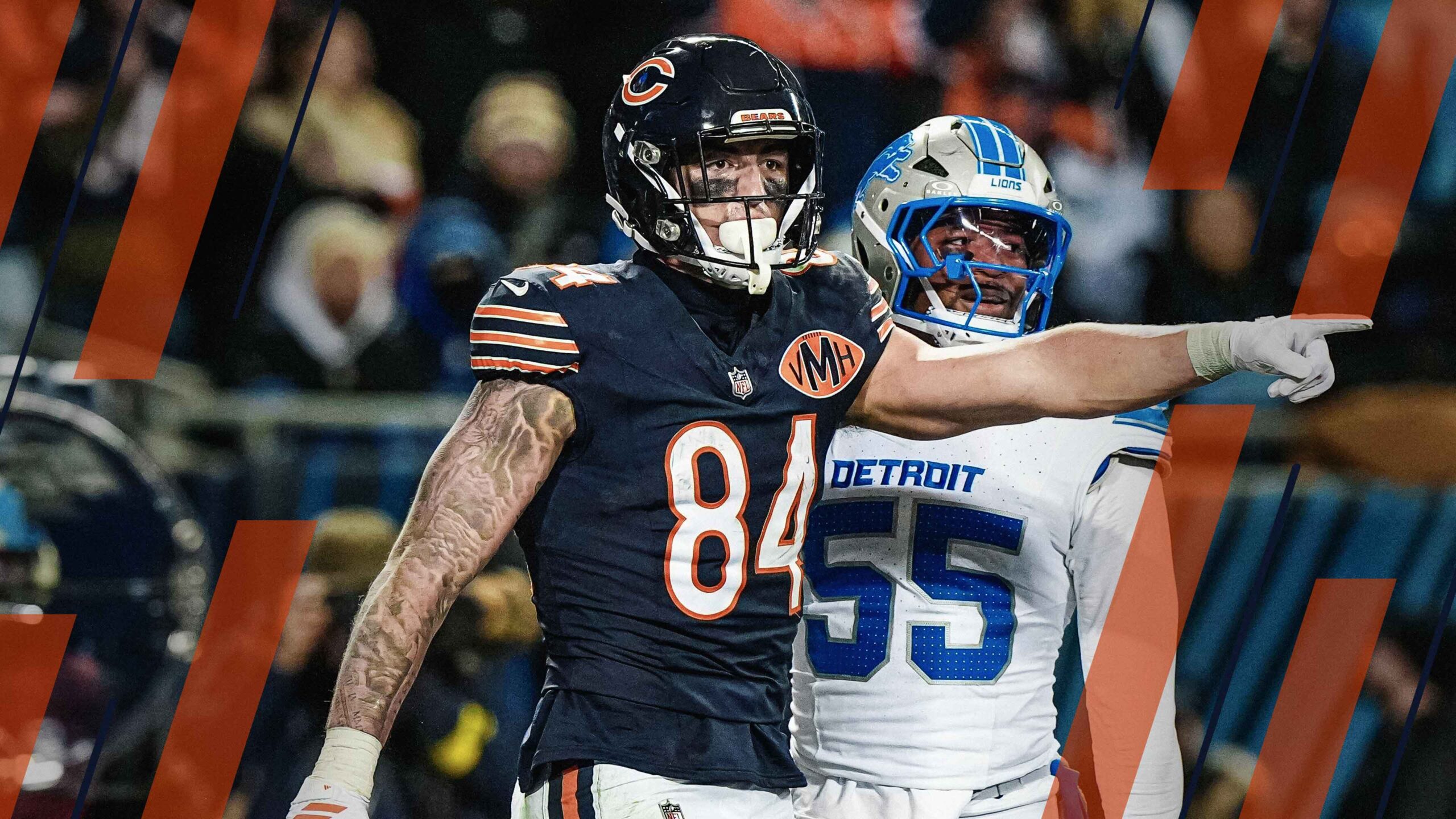
No offense produced more in desperation situations last season than the Bears, and no target emerged more consistently for Caleb Williams in clutch moments than rookie tight end Colston Loveland.
Like many rookie tight ends, Loveland’s development took time. He did not record a fourth-quarter reception until Week 6. By the end of the season, however, he had become one of Chicago’s most reliable late-game playmakers.
Forty percent of Loveland’s receiving yards came in fourth quarters or overtime, as did half of his touchdowns. The 22-year-old closed the season with seven straight games featuring at least one fourth-quarter first down. He ultimately finished as PFF’s highest-graded tight end in fourth quarters and overtime.