Princess of Asturias Award
The "Noah’s Ark" of seeds: arctic vault wins Princess of Asturias Award1.3 million seeds, 249 countries, and one frozen Arctic dome: inside the Norwegian dome preserving biodiversity at -18°C
Añádenos en Google Access to the underground seed store. (Reuters)M. F. Antuña
Gijón
21/05/2026 a las 08:13h.The Princess of Asturias Award for international cooperation has given recognition to a seed vault in Norway that carefully preserves the planet’s biodiversity.
Since 2008, the Norwegian Government has committed to protecting a global seed vault in a safe, controlled environment at a temperature of minus 18 degrees for all these species.
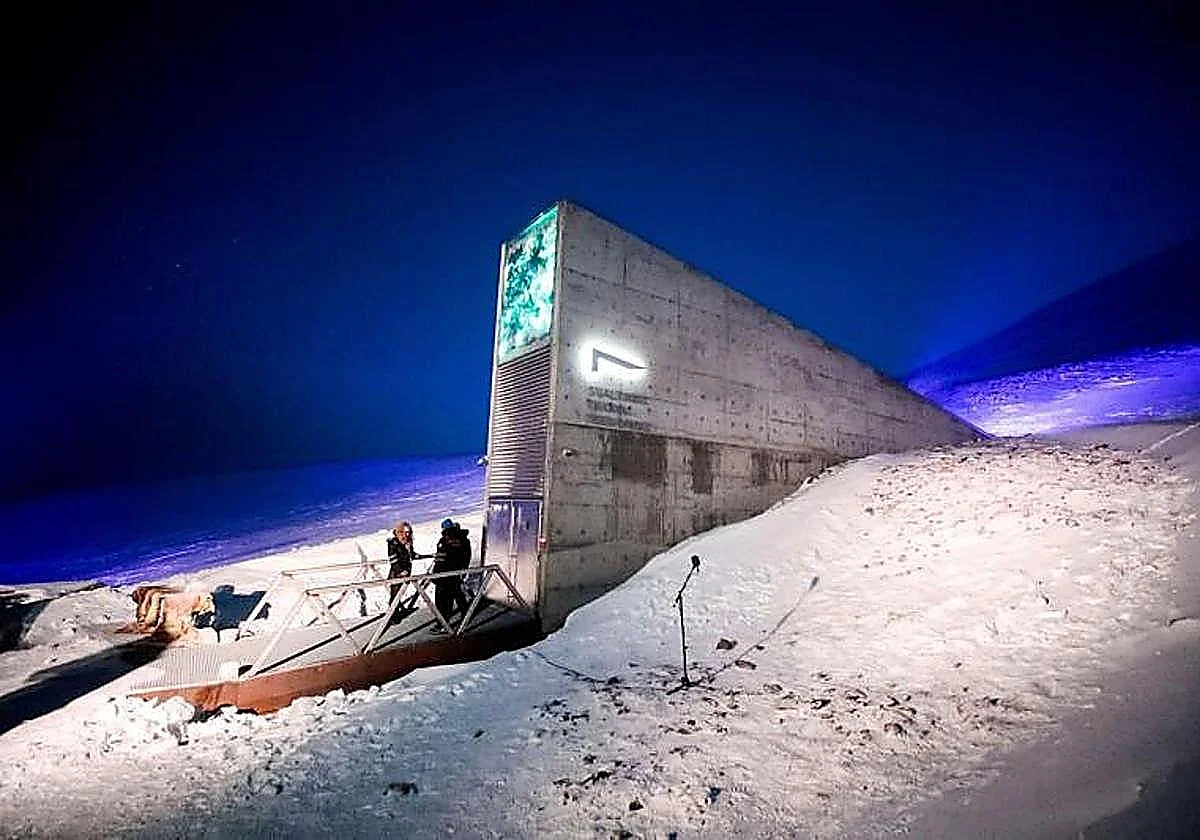
On an archipelago in the Arctic Ocean called Svalbard, on the island of Spitsbergen, near the capital Longyearbyen, lies the Global Seed Vault, a sort of botanical Noah’s Ark or a backup of life where 1.3 million seeds are preserved.
But why did they do it? In the event of disasters, whether natural or man-made, the seeds will be there to be planted and to feed us all. According to data from the Food and Agriculture Organisation of the United Nations, in February last year, more than 6,200 plant species from 249 countries were represented there.
Related story
This seed vault operates through a unique system: it accepts seeds from anyone who wishes to deposit them, voluntary depositors, who retain ownership of and access to the seeds. The system used is known as a ‘black box’ system, meaning that the depositor is the only person who can retrieve the seeds and open the boxes.
Co-managed by Norway and the global crop diversity trust and operated by NorGen (the Nordic Genetic Resource Centre), the vault is governed by the international treaty on plant genetic resources for food and agriculture.
A botanical Noah's Ark
Buried 130 metres deep inside a mountain and 130 metres above sea level, it is protected from all kinds of natural phenomena such as floods, earthquakes or volcanic eruptions, as well as less natural threats such as radiation. It actually has ‘permafrost’, a layer of permanently frozen soil, which means that if there were a power failure and the artificial temperature of minus 18 degrees could not be maintained, it would naturally remain between minus 3 and minus 5 degrees. In other words, preservation is always guaranteed. Fortunately, there is still plenty of space left, as the vault has a capacity for 4.5 million seeds.
A brutalist concrete building with a roof that looks like a piece of art in itself provides access to what is effectively the world’s seed bank, a facility that has already had to be called upon on occasion. Due to the conflict in Syria, in 2015 the international centre for agricultural research in the drylands in Aleppo became the first gene bank to retrieve seeds from Svalbard.
In other examples, many crops from the past have also been lost due to the use of new agricultural technologies and fertilisation systems. This loss of diversity must be recovered, because doing so opens the door to opportunities to adapt plant production to different growing conditions, diseases and pests, and to the climate itself. This is a crucial reserve for all of humanity.
A sub-zero treasure trove
The roots of this project date back to 1984, when the Nordic Gene Bank was established in a former mine. With the entry into force of the International Treaty on Plant Genetic Resources for Food and Agriculture in 2004, the idea of creating this global gene bank took shape thanks to Norway’s initiative, which invested nearly nine million euros in the project. The choice of this frozen archipelago was no accident either. A thousand kilometres from the North Pole, it is a protected area with strong infrastructure and one of the northernmost airports on the planet.