Zoom
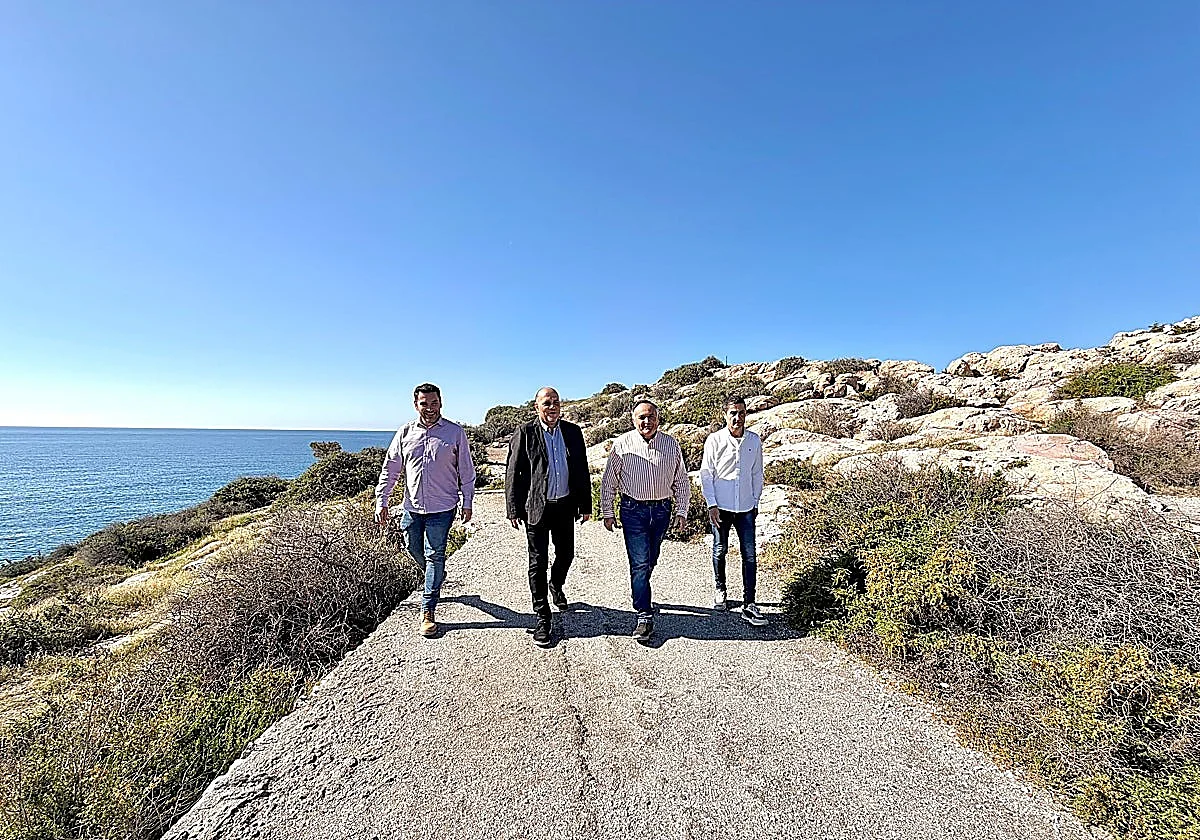
The town’s mayor, Javier Ortega, takes a walk around the Peñón de Salobreña MJAT Parks This is what Salobreña's new coastal park will look likeInformation panels and QR codes will allow visitors to explore the Peñón via a series of paths and spaces to learn about its history and nature
MJ Arrebola
Granada
Thursday, 19 March 2026, 13:09
The Peñón de Salobreña, one of the most popular parts of the Costa Tropical town, is preparing for a transformation that will allow visitors to walk around it and get to know its history and natural wealth.
During a visit to the new coastal park, mayor of Salobreña Javier Ortega, explained that the main objective of the project is to enhance the value of a place which is "very important and attractive from a tourist point of view". However, in his view locals and visitors have not been able to fully enjoy it. The Peñón isn't easily accessible to the public and at night it is not lit.
The project includes the installation of a perimeter fence to ensure the safety of visitors to the site and the installation of small rest areas and soft lighting to allow the rock to be seen even at night without disturbing the environment.
According to Ortega, the project will take advantage of the natural platforms that already exist and instead of building new infrastructures, the nature trails will be upgraded so that they can be used more safely.
In addition, old buildings and construction huts that are now in the area will be removed "to return the space to a more natural state" and "the aim is to make the Peñón passable, safe and enjoyable without losing its essence," the mayor said.
Historical value
Another of the most important aspects of this project will be the dissemination of the historical value of the enclave. The Peñón has been a strategic point and an inhabited place since ancient times. More than two thousand years ago, in the second century BC, it was an islet surrounded by the sea and even housed a temple. With the passage of time and the accumulation of sediment from the Guadalfeo delta, the islet eventually joined the coast to form part of the mainland.
To make this history known, the project will include information panels and QR codes distributed at different points along the route. In this way, visitors will be able to access information on the evolution of the Peñón, its geology and the history of the town from their mobile phones.
The rock is also home to unique plant species, some of which are very rare in the Mediterranean. For this reason, the project envisages the creation of small protected areas to conserve these plants and encourage their regeneration. In addition, invasive species that affect the area will be eliminated.
European funds
The town hall also wants the Peñón to form part of the route of the future path that will connect the Costa Tropical's towns. The idea is that this enclave will become a natural stop along the path, where visitors and locals can stop, rest and get to know the area better.
The project is 100 per cent financed with European funds through the Tourism Sustainability Plan, within the Next Generation programme of the European Union. The budget is around 400,000 euros.
The town hall has put out to tender the draft project and the execution of the work in order to speed up the deadlines. The technical drafting is currently being finalised and official reports are being processed. The work will take three months and the town hall hopes that the project will be finished before 30 June, which is the deadline established within the tourism sustainability plan.
The mayor stresses that another objective of this project is to stop people from "jumping from the rock into the sea", a dangerous practice that takes place in the area in summer every year. Although the fence will not prevent anyone from doing so, it will serve as a "dissuasive measure" and as a "clear sign" that this is a prohibited activity. At the entrance there is already an information panel which warns of fines of 3,000 euros or more for doing so.