Zoom
Andalusian escape What to see in Júzcar: ten curiosities that will make you want to visit this village in the Serranía de RondaThis small municipality in the Genal valley hides much more than its striking celestial-blue houses
Málaga
Tuesday, 10 March 2026, 14:59
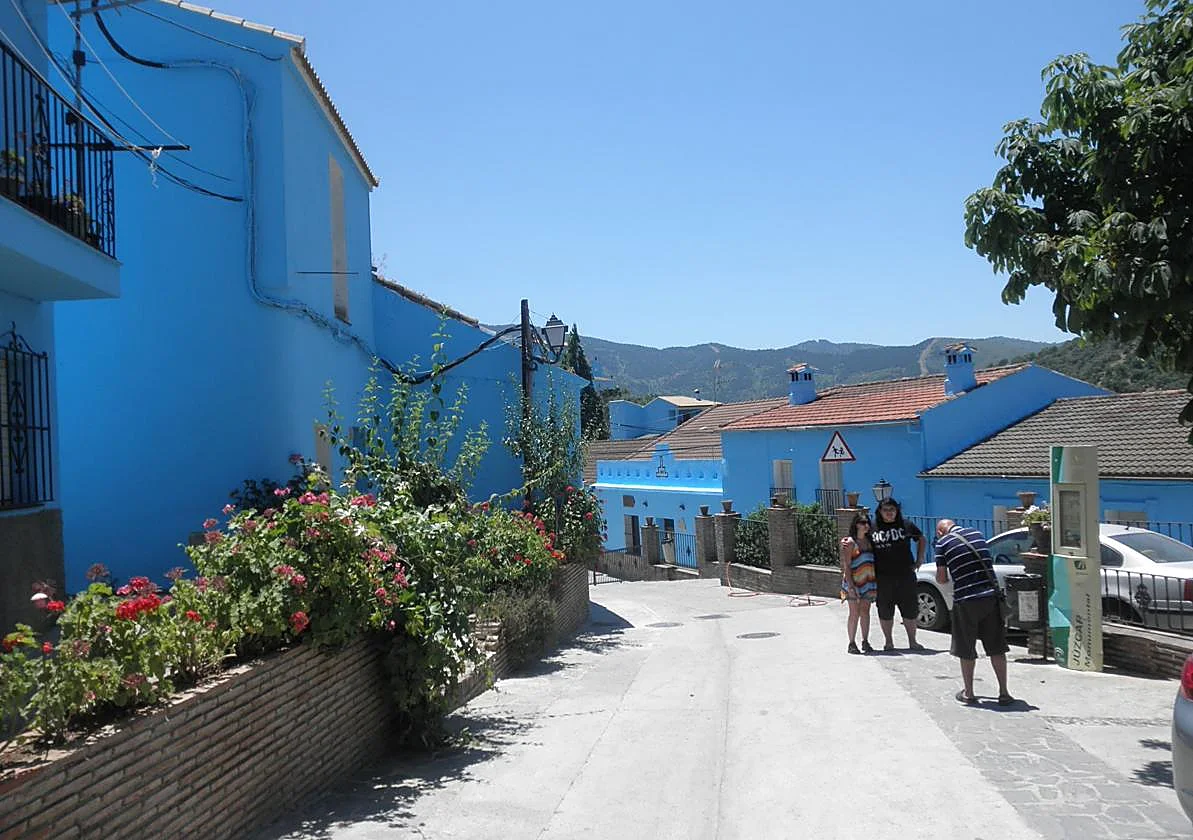
Júzcar, known for years as the Smurf Village and today renamed Aldea Azul, is one of the most surprising destinations in the Serranía de Ronda.
This small municipality in the Genal valley hides much more than its striking sky-blue houses.
Its surroundings include everything from the birthplace of the Spanish iron and steel industry in the 18th century to a Moorish settlement that still preserves traces of its past.
There are also hidden waterfalls, natural springs feeding the Genal river, unique geological formations and fascinating Easter traditions. The village is also home to the celebrated 'chef of the chestnut', whose locally inspired cuisine has put Júzcar firmly on the gastronomic map.
1
La Fábrica de Hojalata: the birthplace of iron and steel in Spain
Zoom
The Fábrica de Hojalata is now an ecological winery. J. A.On the banks of the river Genal, in the municipality of Júzcar, is one of the most surprising places in Spanish industrial history. The San Miguel Royal Tinplate Factory opened there in 1725, considered to be the origin of the national iron and steel industry.
The site was chosen for its isolation, the abundant flow of the river, the presence of surface iron mines and the wood from the nearby forest. A small village was built around the factory with almost 50 workers, many of them foreigners, as well as houses, a tavern and a chapel. Even camels were used to transport the material.
It is said that the two Swiss engineers who were chosen to run it had to leave their country hidden in wine barrels. In this way they circumvented the ban on hiring such experts to avoid competition. After its closure in 1788, the place became linked to stories of bandits and smuggling. Today the restored building houses an ecological winery that produces artisan wines and offers wine tourism experiences.
2
Moclón, the uninhabited village
Zoom
The remains of Moclón village. Ayuntamiento de JúcarVery close to what was once the Royal Tinplate Factory of San Miguel, is one of those places where history seems to have stopped: the uninhabited village of Moclón, whose remains are still preserved in the middle of nature.
Before the Moorish rebellion of 1570, some 18 families lived there, most of them dedicated to agriculture. After the conflict that shook the Genal and Guadiaro valleys, many Moors were expelled and the place was repopulated with Christian families from other parts of Andalucía. Over time, however, the small village would eventually lose its population until it was abandoned.
Today you can still see old houses, an old hermitage and even a bread oven, vestiges of that small rural settlement which can now be reached on foot along a very popular path.
3
The legend of the Virgin of Moclón
Zoom
The Virgen de Moclón, before leaving on the romería. Ayuntamiento de JúzcarIn Júzcar also survives one of those Marian legends so frequent in Andalusian tradition. The story goes that a shepherd found a small image of the Virgin among some mastic tree branches near the uninhabited village of Moclón. He decided to put it in his bag to take it home, but when he arrived he found that it had disappeared. When he returned to the place where it was found, the carving reappeared there, as if it wanted to remain in that enclave. Since then it has been considered that this was the place chosen by the Virgin.
Today the image is venerated in the church of Santa Catalina and every early summer a pilgrimage is held in her honour.
4
Adoration of the Infant Jesus during Holy Week
Zoom
The Huerto del Niño tradition. Ayuntamiento de JúzcarJúzcar also preserves one of the most unique traditions of Holy Week in the Serranía de Ronda: the Huerto del Niño (the Child's Garden). On the eve of Easter Sunday, the villagers go out into the fields to gather branches, plants and vegetables with which they build a small hut or symbolic orchard in the village. The image of the Child Jesus, previously taken from the church, is placed inside the hut. The following day, the Virgin goes out in procession to look for her son and the meeting that symbolises the Resurrection takes place.
In Júzcar, the day is rounded off with another very popular tradition: San Rorro, an amusing doll that is exhibited on these days and which forms part of the peculiar festive imagery of the municipality.
5
La Sima del Diablo, a place to get started in canyoning
Zoom
Sima del Diablo. Rafael FloresWith a name as suggestive as it is disturbing, the Sima del Diablo is one of the most surprising natural spots in the municipality of Júzcar. This enclave was discovered and christened just a few decades ago by members of the Pasos Largos association, who were surprised by this hidden spot in the Genal valley.
It is a small ravine formed by a succession of cascades and waterfalls that feed a tributary stream of the Genal river. The tallest of these waterfalls reaches a height of about ten metres. Due to its characteristics, the place has become one of the most popular places in the Serranía de Ronda for beginners in canyoning, as it combines accessible stretches with several abseils that provide just the right amount of adventure.
6
The source of the Zúas, one of the true origins of Genal
Zoom
The Zúas spring. J. A.A short distance from the town centre of Júzcar is one of the springs most appreciated by the villagers: the Nacimiento de las Zúas, an upwelling of water that constantly feeds the valley and which many locals consider to be one of the authentic sources of the river Genal. Although the official origin is traditionally claimed to be the Igualeja spring, in reality the Genal is formed thanks to the confluence of several rivers such as this one.
The river of Las Zúas, far from being a simple stream, is in fact one of the main tributaries of the Genal and maintains a considerable flow throughout the year. This source, located very close to the village centre, is a place particularly dear to the people or 'juzcareños', who consider it one of the natural jewels of the municipality and the starting point of several routes that take in the old mills and river landscapes of the valley.
7
Los Molinos, the site that recalls the village's past
Zoom
Los Molinos. J. A.A few metres from Júzcar is the spot known as Los Molinos, a corner of the valley where for centuries several water-powered mills operated, taking advantage of the flow of the Riachuelo stream, a tributary of the river Genal.
Even today, constructions linked to that activity and an old stone bridge remain, which helps us to imagine the importance that this small rural enclave once had. One of the most popular hiking trails in the municipality also runs through this place, a circular route called Los Molinos. It is just over a kilometre long and crosses the fluvial environment and leads to the nearby Nacimiento de las Zúas, allowing you to discover some of the freshest and most surprising landscapes in the valley.
8
Los Riscos: a great 'torcal' that Júzcar shares with Cartajima
Zoom
El Águila de los Riscos. J. A.Another curiosity that attracts attention in this village is the spot of Los Riscos. Located between Júzcar and Cartajima, it is one of the most unique geological landscapes in the Serranía de Ronda. It is a karstic complex of eroded rocks that at times is reminiscent of the Torcal de Antequera. This stony labyrinth hides capricious shapes modelled over centuries by wind and rain.
The most famous is the Águila de los Riscos, a large stone that seems to outline the profile of this bird of prey and which has become a symbol of the site. Although until last year, there was a path to walk around this enclave, access is currently restricted as it is largely private land, so that today you can only observe it from afar.
9
From Smurf Village to Blue Village
Zoom
Calle de Júzcar. J. A.For more than five years, Júzcar was known around the world as the First Smurf Village, after its houses were painted blue in 2011 to promote the film The Smurfs 3D.
However, in 2017 the municipality officially lost that name after breaking the agreement with the company that manages the rights to the characters created by Peyo.
Far from renouncing the colour that made it famous, the village has opted to reinvent itself as Aldea Azul, a tourist project that seeks to highlight its natural environment, its history and its fauna and flora, while maintaining the attraction that for years placed Júzcar on the international map.
10
Iván Sastre, the 'chestnut chef'.
Zoom
One of the leading names in inland gastronomy in the province of Málaga is Iván Sastre, known as the chef of the chestnut, who for more than two decades has been based in Júzcar, where he runs the Bandolero hotel and restaurant.
This chef, originally from Ávila, has been one of the great culinary promoters of the Genal Valley chestnut, a product to which he has dedicated much of his gastronomic creativity.
Among his best-known creations is the dessert 'Bosque de Cobre', a tribute to the Genal autumn which can be enjoyed all year round and which has helped to consolidate his restaurant as one of the gastronomic benchmarks of the Serranía de Ronda.
In addition, in recent months he has become a character that is widely followed on social networks thanks to his recipes with leaves and edible flowers and other ingenious creations that have given him thousands of followers.