Zoom
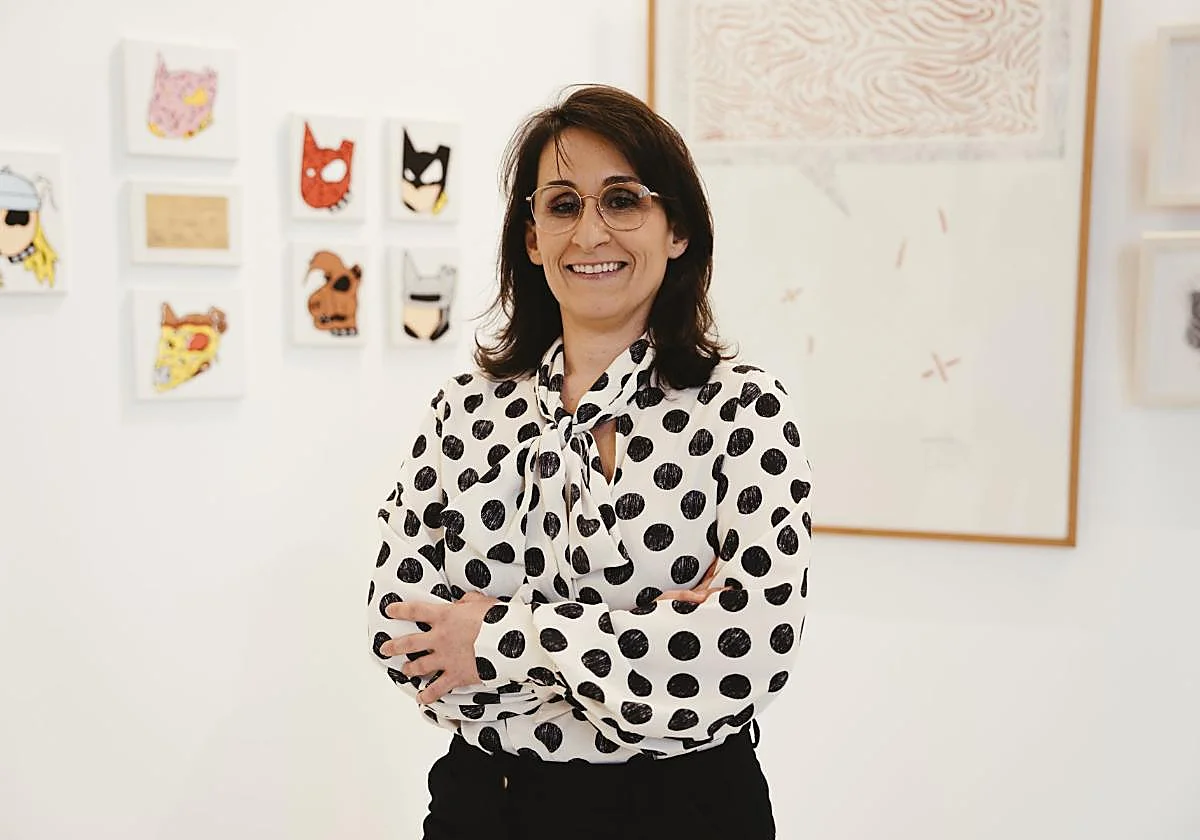
Laura Pérez-Osorio, president of Yes We Tech. SUR Laura Pérez Osorio, president of Yes We Tech 'When women are not on the teams that create technology, we see the same old biases'The association celebrates ten years of fighting the gender gap: "We provide guidance and a network so that girls and women do not feel alone along the way"
Nuria Triguero
Malaga.
Friday, 6 March 2026, 10:52 | Updated 11:11h.
Yes We Tech is an association based in Malaga that has been fighting against the gender gap in technology for ten years. It has become one of the most powerful 'technofeminist' communities in Spain: last year its events had an impact on more than three thousand people. Laura Pérez-Osorio is its president.
.
–Ten years of Yes We Tech: what do you think is the most important of all the work you have done?
-What I am most proud of is the community we have built: a diverse and real network, where women of all ages and backgrounds participate. A community that accompanies, shares resources and makes technology no longer feel like an alien space. In addition to members and volunteers, we have an active network of more than 200 women in a stable group where we share thoughts, resources and opportunities, with the aim of supporting and retaining female talent in technology. All the people who participate in our events on a recurring basis are also part of the community. In 2025 alone, we have reached more than 3,150 people through talks, workshops and collaborations with other entities.
"There is an age at which many girls feel that the technology path is not for them"
–Are we better off now than we were ten years ago in terms of the gender gap in technology?
–The gap has narrowed slightly. Today we are at somewhat better figures than a few years ago and there is more awareness of the need to move towards a fairer environment. Even so, we are still not starting from the same base and as long as this does not change, progress will continue to be slow. The presence of women in Stem professions [science, technology, engineering and maths] has hardly changed in recent years: today, only 27 per cent of people working in this field in Spain are women. And this difference also applies to visibility; general media outlets quote men as experts in subjects such as physics, engineering or technology in 80 per cent of cases. This is why organisations like ours are necessary.
–Why is it so difficult to change this reality?
–Because until we feel that we are in the technological space by our own right and not borrowing [a man's place] we will not feel that we can participate in the same way. The way women are challenged is much more demanding and if we know we are going to find ourselves without a support network it is easier to rule it out as an occupation. When you have also grown up in a society that has taught you not to stand out, not to cause trouble and not to take up too much space, making progress in such a masculinised field becomes even more difficult. If every step is accompanied by doubt, questioning or the feeling of always being tested, many end up giving up. Not for lack of talent, but for lack of support, validation and the certainty that this space is also theirs.
–You have a daughter and a son. How difficult is it to raise them without gender stereotypes?
–It is not easy. Everything is still very much designed so that each gender occupies 'its' space, from clothes, to the messages they receive in cartoons, and so on. My seven-year-old daughter tells me that when boys play football, girls are pushed out of the space. And some girls start to receive aesthetic pressure very early on, through social media, which makes them spend their time on decorative aspects while others evolve towards things that we can understand as more productive. Yes, in the end it is hard and I have to stop myself many times and look at what I am demanding of one or the other. In any case, as much as we mothers (because it is usually the mothers) try to provide an egalitarian upbringing, we are fighting against a mastodon that is social education, so it would be wrong to assume that this is exclusively a domestic responsibility.
–Studies suggest that there is a point in the educational pathway where girls start to get lost on the road to Stem vocations. What happens there? Are things being done wrong in schools?
–I don't think schools are doing it wrong. The problem is not so much in the classroom but in everything that surrounds girls from a very young age. There comes a time, in pre-adolescence, when many girls start to feel that this path is not for them. Not because they don't have the ability, but because they can't find a support network to accompany them. They see themselves alone, without clear role models, sometimes being the only girl interested in technology in their surroundings and with the feeling that they are occupying a space that does not belong to them. Moreover, this age is characterised by a strong desire to belong to a social group, so they tend to try not to be different, but quite the opposite. That is why we at Yes We Tech put so much effort into creating this network of girls interested in Stem, so that they can find a friendly face on their way into the technological world.
-What actions have proven to be most effective in arousing interest in technology in young girls?
-The workshops we do with the youngest girls are very dynamic and participative. The contents are a first and brief approach to different areas, such as cybersecurity, artificial intelligence, programming or robotics, but they are not the most important thing. What is really transformative and what we put a lot of effort into is that they create that first network of contacts, that they get to know each other, that they generate community and weave a network of friendships that accompanies them in their interest in technology.
"AI reproduces stereotypes, makes women invisible or represents them in a biased, sexualised or secondary way. It can become an ally, but only if we are aware of these biases and combat them"
–To what extent are role models important?
–It is very important to work with real and close role models, with whom the girls can identify. In CyberGirl Squad, for example, the monitors are students doing technical degrees or women in their first jobs. Girls they can look up to and want to follow. Just today we launched the book Damos Con la Tecla, written by Paloma Zamora and illustrated by Pedrita Parker, which includes the stories of more than 25 women who have excelled in Stem areas: from astronaut Sara García to local talent such as Ana and María García Puyol.
–Are tech companies doing enough to combat the gender gap?
–From the figures, we could say no. In Spain, around 62 per cent of technology companies do not have any women in their teams, and this figure is particularly worrying. These are companies that are designing the technology that we all use, and when that technology is built without diversity, it does not respond equally to all realities. We see this, for example, in health applications that have more errors in diagnosing women, or in car safety systems, designed based on male standards that are less protective of women's bodies. When women are not on the teams that create technology, that technology ends up reproducing the same old biases.
-Is there still a problem of corporate culture in the tech sector that drives out female talent or has this changed?
-More than a problem of driving out, the big problem remains access. In Spain, the proportion of women who study Stem degrees and the proportion of women who finally work in the sector is very similar, around 25 per cent in both cases. This indicates that the gap is not only generated within companies, but much earlier. Getting into the tech sector remains difficult. The road is full of invisible barriers: lack of role models, lack of support networks, the feeling of not belonging and a culture that still presents technology as a masculinised space. This does not absolve companies of responsibility. Corporate culture remains key: if the selection processes, visibility, working environments and internal models do not change, access will remain limited.
-Let's talk about AI and its biases. Artificial intelligence is being trained with historical data full of bias. Are we creating a technology that can widen the gender gap? Or can we turn AI into an ally?
-Yes, it is an issue that concerns us enormously. We expose it in our talks and we even did a talk and a workshop to go deeper into it together with experts such as those from Colectiva Femias. They investigate where artificial intelligence comes from and how these systems are built, which is trained with historical data that is already full of bias and which, in many cases, comes from precarious and underpaid classification and labelling work by people with their own cultural and social frameworks. In the case of gender, this translates into AI reproducing stereotypes, making women invisible or representing them in a biased, sexualised or secondary way. These representations not only reflect reality, but also shape it. AI can become an ally. But only if we are aware of these biases and act with intention. That means reviewing the data, questioning how models are trained, introducing diversity in the teams that develop the technology, and using AI ethically and critically, consciously deciding what values we want it to reproduce.
-What message would you give to a 12-year-old girl who today thinks that technology is not for her?
-I would tell her, first of all, that she is not alone. If she feels that technology is not for her today, it probably has more to do with what she has seen around her than with her actual capabilities. I would tell her to find a good network of girls with similar interests. I would invite her family to accompany her, to motivate her and to bring her some of the resources that already exist: podcasts, books, workshops and meetings designed specifically for them, such as those we promote at Yes We Tech. And, above all, I would remind her that technology is not a club where you have to ask permission to enter, that this space also belongs to her.