Estimated Reading Time: 8minutes
🏈 Draft Season 2026Prepare for the 2026 NFL Draft with PFF+
Your complete draft preparation toolkit
Mock Draft Simulator 2026 NFL Draft Big Board Big Board Builder NCAA Premium Stats SubscribeRunning back is perhaps the most volatile position in the NFL and, therefore, in fantasy football. Adding to that volatility is the specter of brutal, season-ending injuries that can rock any team and fantasy roster.
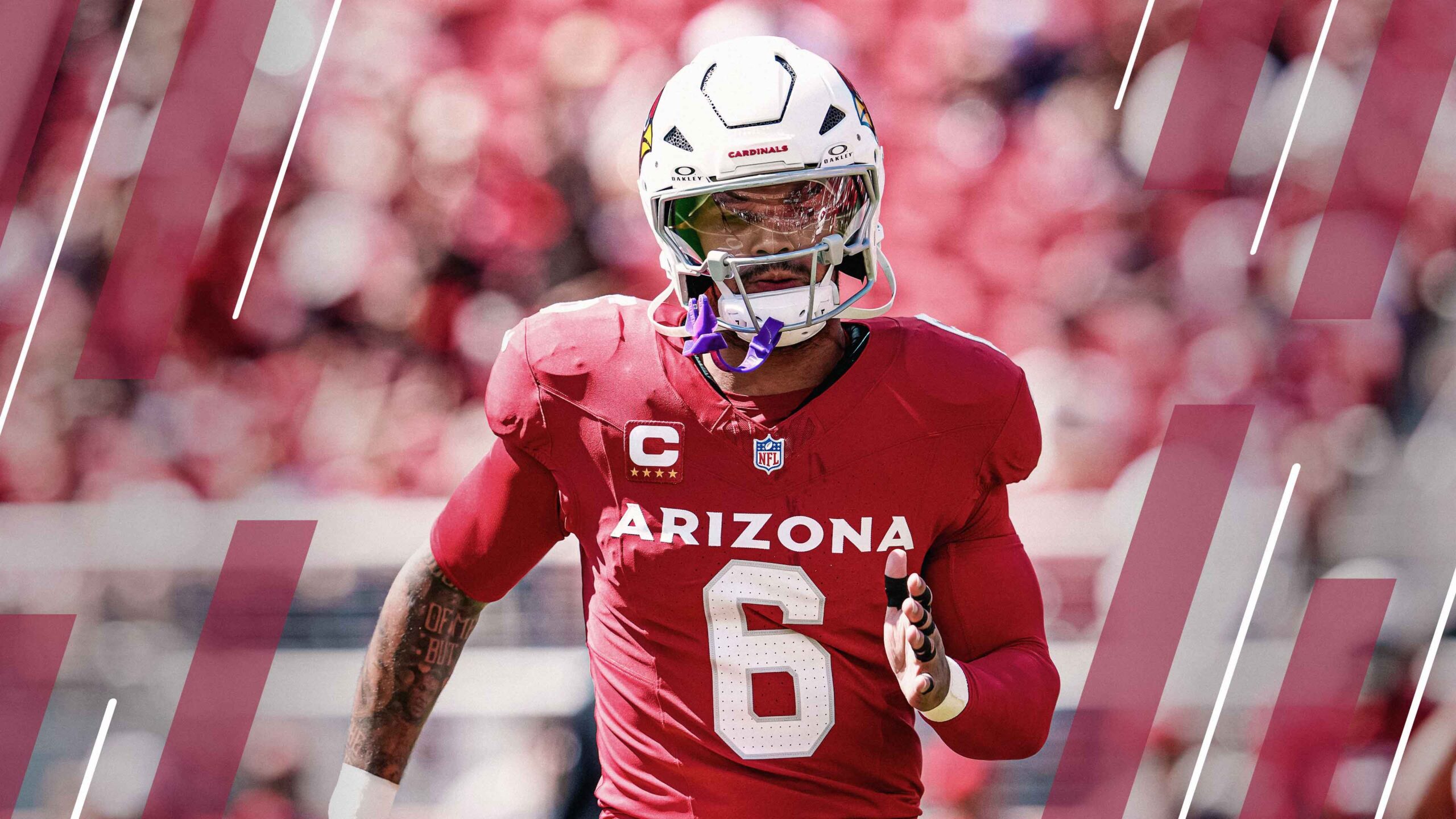
2025’s injury bug bit as early as Week 2 when the Washington Commanders lost Austin Ekeler to an Achilles injury. Arizona Cardinals lead back James Conner suffered a foot injury that ruled him out for the rest of the campaign in Week 3, and New York Giants bruiser Cam Skattebo suffered a grim lower leg injury in Week 8.
While Skattebo is likely to inherit a sizable workload upon his return to the field, the age of both Ekeler and Conner, twined with their injuries, means their workload could dwindle and make them unstable fantasy assets.
Much like the previous piece on quarterbacks, we’ll be looking at 10 running backs over the past decade: Le'Veon Bell (injured in 2015), Marshawn Lynch (retired, counting it because he missed a year of action), Dalvin Cook (2017, rookie season), Saquon Barkley (injured in 2020), Christian McCaffrey (2024 season), Devonta Freeman (2018), J.K. Dobbins (missed 2021), Raheem Mostert (2021), Breece Hall (2022, rookie season) and Nick Chubb (2023).
Jamaal Charles and Arian Foster are honorable mentions. The pair suffered serious knee injuries during the 2015 season and never fully recovered, with Charles playing only 19 more games in his career and Foster featuring in just two more. That itself is a shred of evidence of how quickly a running back's career can be derailed.
Here is how the above running backs did before their injury (or Lynch’s retirement; we’ll use his 2015 numbers). We’ll also be listing their fantasy football positional rankings based on the week of their injury and not year-end ones, as that would not be a fair reflection of their production:
PlayerPFF Rushing GradeRush Att.Rush YardsYards/CarryRush TDsRB FinishBell86.31135564.93RB8Lynch90.21114173.83RB39Cook76.6743544.82RB9Freeman56.014684.90RB69Barkley62.319341.80RB41Dobbins81.61348056.09RB28Mostert77.01045215.02RB47Hall76.4804635.84RB7Chubb81.6281706.10RB23McCaffrey68.1502024.00RB15When averaging out the 10 players, it works out at a truly grim 72 attempts for 359 yards, 4.71 yards per carry and just over two rushing scores.
That average falls further with Dobbins and Mostert lifted from the data set, as we’re using their previous season’s production. With that qualifier, it shakes out to 61 rushing attempts for 283 yards and one score on 4.51 yards per carry.
That, of course, is not the interesting part, as the numbers for all of the above are expected to be depressed, given that we’re tracking the seasons in which they got injured.
The interesting bit is below. Here are the numbers for the same 10 players the year following that injury (in Lynch’s case, a year out of the league by way of retirement):
PlayerPFF Rushing GradeRush Att.Rush YardsYards/CarryRush TDsRB FinishBell76.92611,2684.97RB3Lynch76.42078914.37RB23Cook70.41336154.62RB30Freeman57.01846563.60RB18Barkley65.71625933.70RB30Dobbins78.2925205.72RB56Mostert80.71818924.93RB27Hall77.82239944.55RB2Chubb62.51023323.33RB58McCaffrey69.13111,2023.910RB1Averaging these numbers out gives us a much healthier complexion of 186 attempts for 796 yards and four touchdowns on 4.34 yards per carry. That all converts into 103.3 fantasy points just from rushing production alone in standard-scoring PPR formats (RB47 in 2025).
That receiving value matters. Just looking at rushing production, McCaffrey would have finished as the RB25 had he not caught a single ball on the season. But he did. In fact, he caught 102 of them for 924 yards and seven touchdowns. Fun fact: McCaffrey’s receiving production alone added up to 236.4 fantasy points, which would have been good for the RB14.
The most notable data point from the average is the yards per carry, which takes a slight drop from 4.71 to 4.34. However, the volume is hugely up, so we can forgive the drop-off.
But what about a back’s explosiveness? Those missed tackles, breakaway runs and yards after contact? These are much better indicators of how a back performs than their simple yards per carry numbers and rushing totals.
Le'Veon Bell
Pre-InjuryPost-InjuryYards After Contact/Att3.413.01Missed Tackles Forced2347Explosive Runs1337PFF Elusive Rating69.754.7Marshawn Lynch
Pre-RetirementPost-RetirementYards After Contact/Att2.653.09Missed Tackles Forced2942Explosive Runs1321PFF Elusive Rating80.168.0Dalvin Cook
Pre-InjuryPost-InjuryYards After Contact/Att2.673.02Missed Tackles Forced1429Explosive Runs817PFF Elusive Rating56.181.9Devonta Freeman
Pre-InjuryPost-InjuryYards After Contact/Att2.212.43Missed Tackles Forced031Explosive Runs215PFF Elusive Rating11.737.0Saquon Barkley
Pre-InjuryPost-InjuryYards After Contact/Att2.212.69Missed Tackles Forced320Explosive Runs19PFF Elusive Rating53.135.7J.K. Dobbins
Pre-InjuryPost-InjuryYards After Contact/Att3.473.09Missed Tackles Forced2618Explosive Runs2016PFF Elusive Rating70.859.2Raheem Mostert
Pre-InjuryPost-InjuryYards After Contact/Att2.463.52Missed Tackles Forced1239Explosive Runs1127PFF Elusive Rating28.784.7Breece Hall
Pre-InjuryPost-InjuryYards After Contact/Att4.133.41Missed Tackles Forced1545Explosive Runs1520PFF Elusive Rating95.879.9Nick Chubb
Pre-InjuryPost-InjuryYards After Contact/Att4.042.68Missed Tackles Forced620Explosive Runs65PFF Elusive Rating75.752.5Christian McCaffrey
Pre-InjuryPost-InjuryYards After Contact/Att2.702.76Missed Tackles Forced547Explosive Runs627PFF Elusive Rating33.246.8Mostert’s efficiency took the biggest leap, with his yards after contact per attempt going up a whole yard and his PFF Elusive Rating jumping by a whopping 56.0 points.
It helped that the former San Francisco 49er went to the Miami Dolphins when former head coach Mike McDaniel was shining with his run scheme (not that Mostert’s other head coach, Kyle Shanahan, was any slouch).
Some players are truly never the same after injury, however. Chubb’s yards after contact per attempt average dropped by 1.36 yards, and he had fewer explosive runs in eight games in 2024 (five) than he did across two games in 2023 (six) with 74 more carries on the 2024 season. His PFF Elusive Rating also plummeted by 23.2 points, the largest drop of the 10 listed names.
For the most part, however, the 10 listed backs averaged more yards after contact per attempt (six did), and some even returned more elusivity than the prior season (four managed this mark).
Read More Stories Explore PFF Tools 16 min read Quick Read After Patrick Mahomes' seasong-ending injury, what should we expect from him in fantasy moving forward? Fantasy Football: How do quarterbacks perform post-injury? By Ryan Conway 15 min read Quick Read The Bills' James Cook was among the NFL's top first-half running backs in 2025. Fantasy Football: Which running backs get off to hot starts, and which close out games? By Ryan Conway Try the tool Mock Draft Simulator Make picks, trade up, and run your own draft in minutes. Build your board Big Board Builder Create custom rankings with Scouting Mode at the core. More Coverage Mock Draft Simulator Be the GM for any team in the 2026 NFL Draft with a fully immersive simulation that lets you trade picks and players for a realistic, in-depth draft experience. 2026 NFL Draft Big Board Trevor Sikkema’s personal rankings, complete with three-year player grades, position rankings and in-depth scouting reports for the top prospects in the class. Big Board Builder Create your own customized draft rankings, with Scouting Mode at its core — a fully customizable grading system that puts the entire evaluation process in your hands. NCAA Premium Stats Our exclusive database, featuring the most in-depth collection of NCAA player performance data.If you’re the fantasy owner of a running back who has suffered a serious injury, it’s perhaps not the time to panic.
That is, unless you’re the owner of James Conner or Austin Ekeler, or maybe even Quinshon Judkins, who suffered a gruesome leg injury that he is expected to fully recover from, but only time will tell how he looks on the field.
It can be hard to have faith in a running back returning from a season-ending injury and then producing respectable numbers, but it is often the case.
In dynasty formats, resist the urge to sell at a bargain-bin price, and if you’re in the market for a back and an owner is concerned they’re now sitting on a declining asset, see if they will flip for a lower-priced asset.
In redraft formats, take advantage of value in those ADP fallers coming off injury. They may even start the season on injured reserve, but if they can be back and worked into the rotation come Thanksgiving, you could have a potential week- or league-winner down the stretch.