Estimated Reading Time: 5minutes
Health, touchdown dependence and offensive environmental factors can significantly impact NFL player productivity. In some such cases, players may start hot, producing high-end fantasy-scoring results, before cooling off, delivering unusable stat lines late in the season.
We're breaking down three such players, using Weeks 1-17 and half-points-per-reception scoring as the default formats unless otherwise stated.
🏈 Draft Season 2026Prepare for the 2026 NFL Draft with PFF+
Your complete draft preparation toolkit
Mock Draft Simulator 2026 NFL Draft Big Board Big Board Builder NCAA Premium Stats SubscribeWR Emeka Egbuka, Tampa Bay Buccaneers
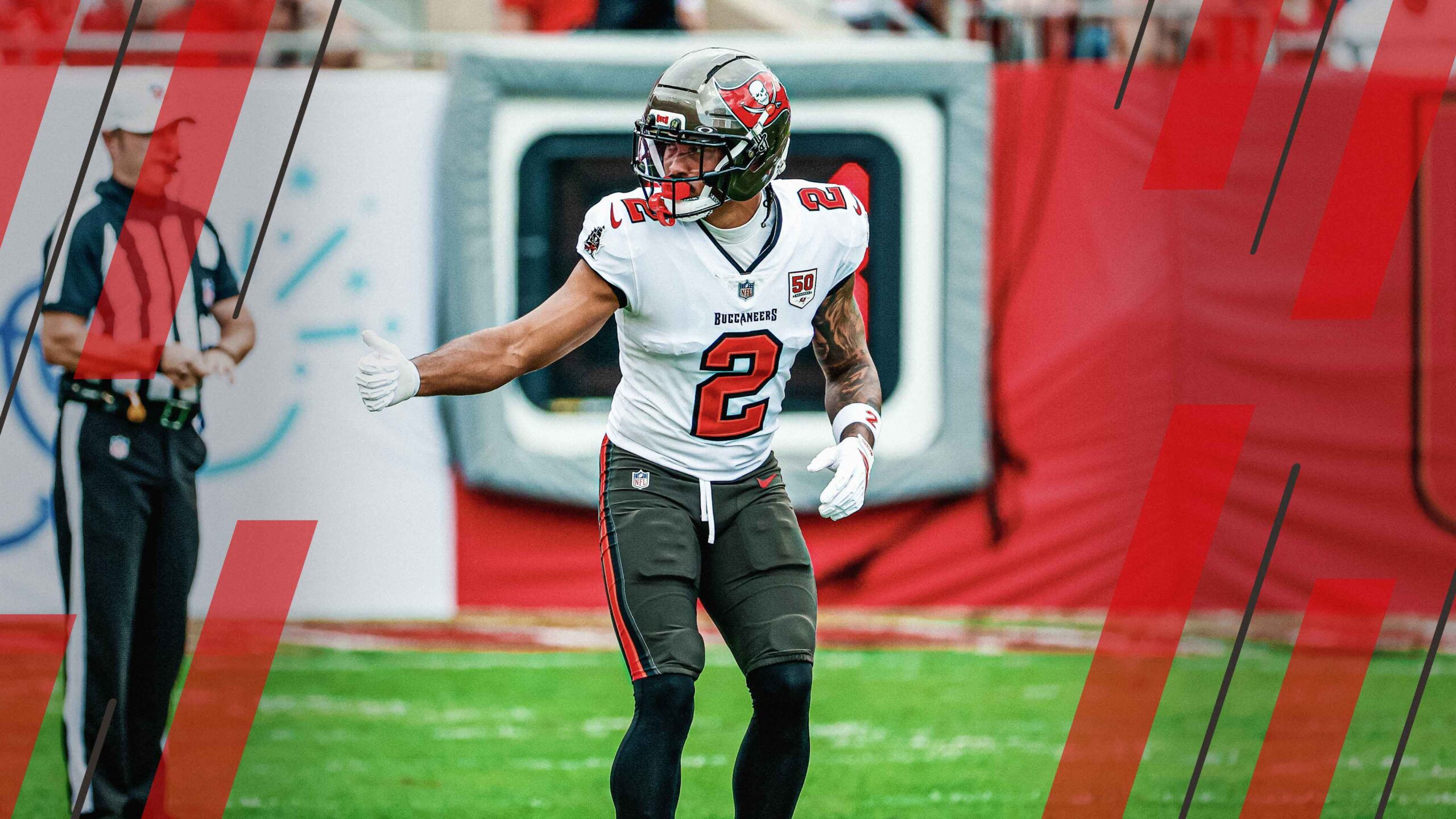
First-round rookie wide receiver Emeka Egbuka opened the season as the Weeks 1-5 overall WR3, scoring 89.9 half-PPR points. He produced just two top-36 positional finishes thereafter, finishing as Week 7’s WR34 and Week 10’s overall WR3. He was the WR43 in Weeks 6-17, logging just 73.0 half-PPR points. Among 36 wide receivers with at least 700 offensive snaps in Weeks 1-17, Egbuka’s 68.2 PFF offense grade ranked 27th.
Buccaneers No. 1 wide receiver Mike Evans missed Weeks 4-6 due to a hamstring strain and Weeks 8-15 due to a collarbone fracture and concussion. Slot receiver Chris Godwin sat out for Weeks 1-3 while rehabbing his 2024 season-ending fibula fracture and ankle dislocation, and he missed Weeks 6-11 with a new fibula injury. Both Evans (71.2) and Godwin (68.8) earned career-low PFF receiving grades this season.
Egbuka produced career-high receptions and receiving yards sums with both players sidelined in Week 5 against the Seattle Seahawks’ elite defense, catching all seven of his targets for 163 yards and one touchdown en route to an overall WR2 finish.
The table below compares Egbuka’s Weeks 1-5 receiving data among 36 wide receivers with at least 30 targets during that span, as well as his Weeks 6-17 receiving data among 33 wide receivers with at least 62 targets during that span.
Weeks 1-5Weeks 6-17PFF Receiving Grade75.8 (T-No. 14)62.0 (No. 32)Targets38 (T-No. 12)85 (No. 12)Target Rate21.2% (T-No. 22)25.1% (No. 11)Yards Per Route Run2.49 (No. 7)1.43 (T-No. 29)Yards After Catch Per Reception5.8 (No. 2)4.8 (No. 12)Egbuka earned 28 first-read targets at a 24.3% rate in Weeks 1-5, accounting for 73.7% of his total targets during that span. He earned 67 first-read targets at a 32.5% rate in Weeks 6-17, accounting for 78.8% of his total targets over the stretch.
Then, Egbuka suffered a hamstring strain in Week 6. While he was able to play in Week 7, he saw fewer targets on plays where he did not operate as the first read, which could be attributed to the soft-tissue injury's lingering effects.
Buccaneers quarterback Baker Mayfield dealt with a biceps injury in his throwing arm early in the season (Week 4), followed by a knee injury (Weeks 8-10), an oblique strain (Week 10), a left AC joint sprain (Weeks 12-15) and a right shoulder injury (Week 18). He was also listed with an illness in Week 12. He earned a 64.8 PFF passing grade this year, the lowest in any of his three seasons with the Buccaneers.
Egbuka’s exceptional per-route efficiency early in the season suggests he is a talented player whose fantasy value was not artificially inflated by touchdown productivity. His hamstring injury and Mayfield’s poor health were likely significant factors in his cold stretch.
TE Jake Ferguson, Dallas Cowboys
Ferguson banked five top-five positional finishes in Weeks 1-7, with Cowboys No. 1 wide receiver CeeDee Lamb sidelined by a high-ankle sprain in Weeks 4-6. A Week 14 calf strain plagued Ferguson through the rest of the season, including a Week 17 aggravation. He notched just three TE1 finishes in Weeks 8-17, peaking at the overall TE7 spot in Week 11.
Ferguson’s qualifying 60.2 PFF overall grade in 2025 ranked 27th among 34 tight ends with at least 525 offensive snaps in Weeks 1-17. Lamb, meanwhile, posted a 79.0 PFF receiving grade — the second-lowest mark in his six NFL seasons. The causes behind Ferguson’s hot start and cold finish were clear.
He earned targets at a 27.6% rate in Weeks 1-7 while averaging 1.59 yards per route run and earning a 68.1 PFF receiving grade. Those numbers fell to 14.6%, 0.96 and 53.8, respectively, in Weeks 8-17. The two per-play metrics dipped to 13.5% and 0.89, respectively, during his Weeks 14-17 calf-afflicted stretch. Ferguson earned a 59.4 PFF receiving grade during that span.
The 27-year-old is a starting-caliber tight end, but his inflated early-season successes are partially attributable to environmental factors, while his late-season cold streak was similarly impacted by his calf injury and the Dallas receiving corps’ return to good health.
Read More
Fantasy Football: Hidden MVPs of the 2025 NFL season
Read More →WR Jaylen Waddle, Miami Dolphins
Waddle’s 120.3 half-PPR points scored in Weeks 1-10 earned him the overall WR10 spot in season-long scoring. He then tallied just 41.8 half-PPR points in Weeks 11-17, clocking in as the WR44 during that span. Waddle’s hot start and cold finish are difficult to explain, although an offensive environmental factor could be to blame. He earned the second-highest PFF receiving grade (85.1 PFF receiving grade) among his five NFL seasons.
Waddle played through a Week 2 shoulder injury in Weeks 3-4. He managed to strain both hamstrings during Week 8’s Thursday practice, yet he missed no games. He played through foot injuries in Weeks 10 and 13 and was eventually sidelined in Week 18 after suffering a ribs injury in Week 17.
Waddle produced overall WR22, WR45, WR4 and WR11 results in his injured Weeks 1-10 showings. He finished as the WR48 and WR28 in his two active, injury-impacted Weeks 11-17 games.
Dolphins No. 1 wide receiver Tyreek Hill suffered a multi-ligament, season-ending knee injury in Week 4, lessening Waddle’s target competition. Hill earned an 81.0 PFF receiving grade this season. Despite the expected role increase, Waddle never once saw double-digit targets in a game this season. He did so just once last year, logging 12 in Week 14 against the New York Jets.
Waddle earned 65 targets at a 22.9% rate while averaging 2.36 yards per route run and earning an 87.2 PFF receiving grade in Weeks 1-10. He earned 34 targets at a 25.8% rate while averaging 1.82 yards per route run and securing a 70.9 PFF receiving grade in Weeks 11-17.
Miami notably benched starting quarterback Tua Tagovailoa for rookie Quinn Ewers in Week 16, but that accounts for less than two full games for Waddle, given his Week 17 ribs injury. Tagovailoa’s 65.8 PFF passing grade soundly bested Ewers’ 40.5 mark.
Miami’s 57.8 offensive plays per game ranked dead last, which reduced Waddle’s ability to earn targets voluminously. That datapoint is likely the single largest contributor to Waddle’s cold finish, though he will be further studied this offseason.