Downloads
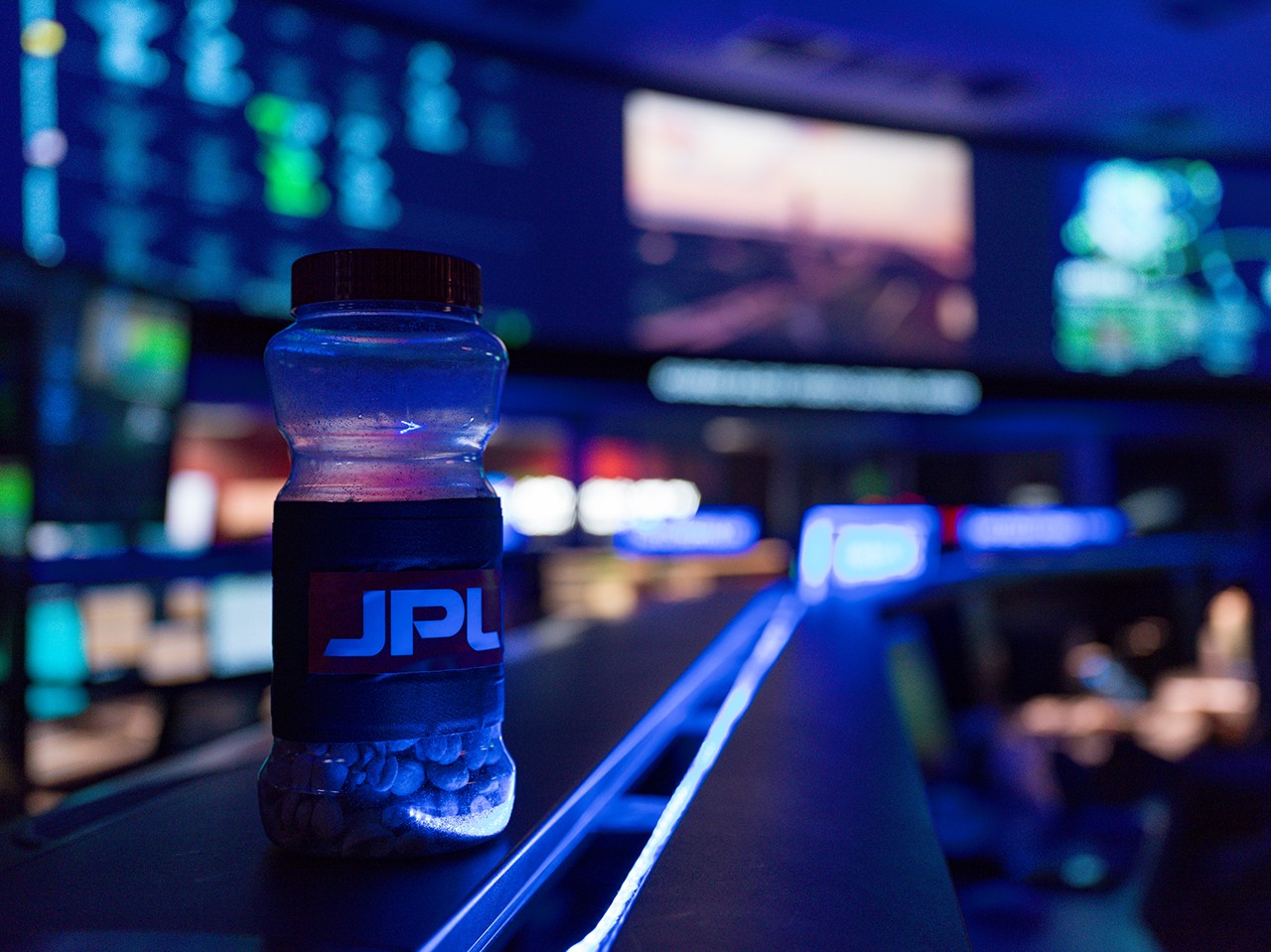
JPL’s ‘Lucky Peanuts’ Before Artemis II Launch
JPEG (67.09 MB)
Description
A container of “lucky peanuts” sits above workstations within the Space Flight Operations Facility at NASA’s Jet Propulsion Laboratory shortly before the launch of the Artemis II mission to the Moon on April 1, 2026. Eating peanuts before launches and other major mission events is a longstanding tradition at JPL.
The Space Flight Operations Facility operates the DSN, which comprises three complexes in Goldstone, California; Madrid, Spain; and Canberra, Australia. Each complex consists of several radio frequency antennas that communicate with dozens of spacecraft exploring the solar system in addition to the crewed Artemis II mission.
The DSN is managed by JPL for the agency’s Space Communications and Navigation program, which is located at NASA Headquarters within the Space Operations Mission Directorate. The DSN allows missions to track, send commands to, and receive scientific data from faraway spacecraft. JPL is managed by Caltech in Pasadena, California, for NASA.
For more information about Artemis II, visit: https://www.nasa.gov/mission/artemis-ii/
Keep ExploringDiscover More Topics From Photojournal
Photojournal
Search Photojournal
Photojournal’s Latest Content
Feedback