Zoom
Consumer affairs Major online retailers slammed for selling V-16 emergency beacons that don't conform to Spain's new road regulationsA leading consumer watchdog has put several e-commerce giants in the spotlight for allegedly misleading customers by letting vendors advertise devices for sale that will imminently become obsolete for lack of connectivity
Canal Motor
Madrid
Wednesday, 24 December 2025, 13:50
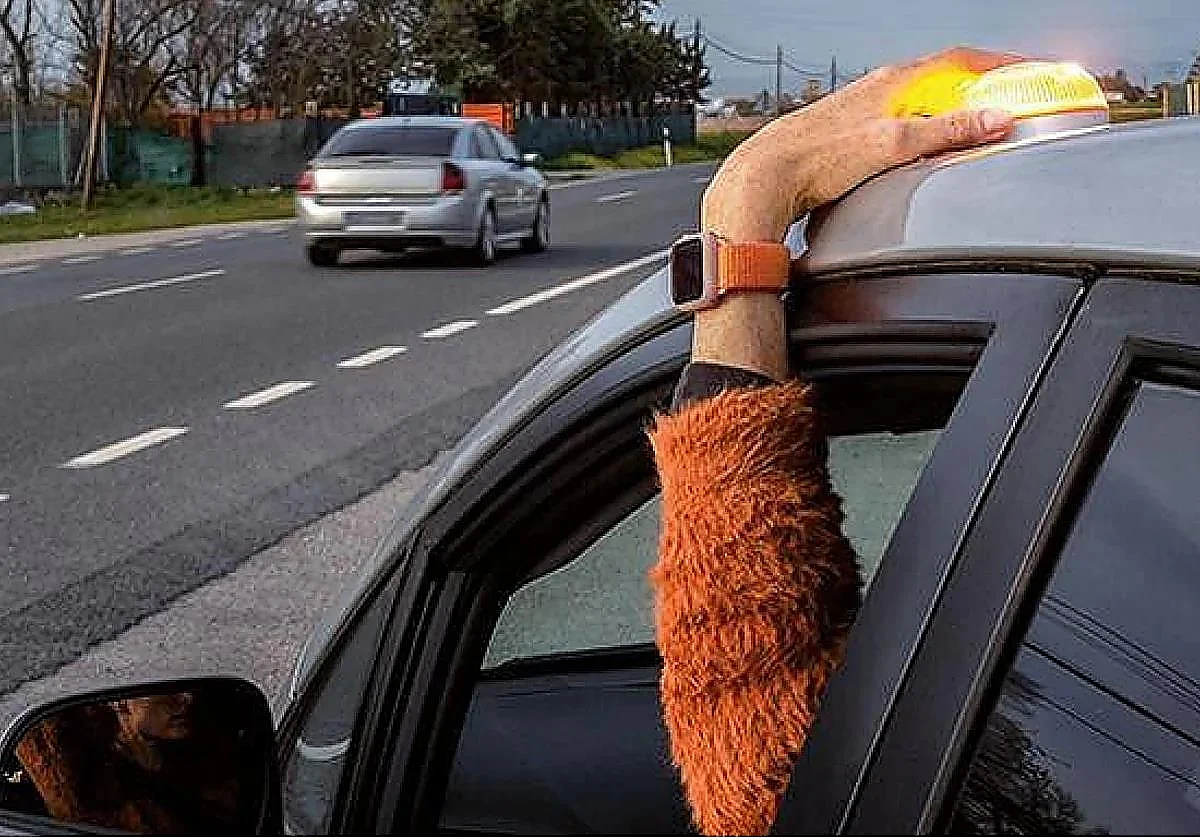
The connected V-16 emergency beacon device will be the only legal means used in Spain of signalling immobilised vehicles on the roads from 1 January 2026, replacing the reflective warning triangles.
With less than two weeks to go before it becomes compulsory to carry the V-16 flashing emergency beacon in vehicles, the Spain's national DGT traffic authority has reminded all drivers of the need to have an approved device for signalling breakdowns and accidents on the road. This device will permanently replace emergency triangles and aims to reduce road accidents following breakdowns.
However, this new regulation is causing some considerable controversy . The latest comes from consumer association Facua, which has filed a formal complaint with the Ministry of Consumer Affairs against several e-commerce platforms for selling V-16 beacons without the required connection to the DGT. The association warns that these devices are being marketed as "approved" without any warning that they will cease to be legal as of 1 January 2026.
Related stories
Firefighter's viral video warns motorists of risks of new V-16 beacon, soon to be obligatory in Spain
The V-16 safety beacon that will become compulsory for 30 million vehicles in Spain in a few weeks
Spain's traffic authority says that 'police will be flexible' to facilitate transition to V-16 beacons
The complaint points directly to online retail giants such as Amazon, AliExpress and Leroy Merlin. According to Facua, these platforms allow advertisements that mislead consumers because they would be purchasing products whose validity expires soon without receiving clear information about this expiry date.
Key elements of the official complaint
Misleading advertising: Products are advertised under the "DGT-approved" seal, but omit the fact that this approval is provisional and expires at the end of 2025.
Lack of information: Neither the vendors nor the platforms clarify that, from 2026 onwards, only beacons incorporating geolocation connected to the DGT 3.0 platform will be valid.
User reviews: Facua has detected that there are already negative reviews from buyers on these websites warning of a lack of transparency, without the platforms having taken steps to correct the listings.
Facua points the finger at the online businesses and also criticises the attitude of the DGT as "passive". The organisation has criticised the DGT for not having issued a public alert to prevent its logo from being used as a marketing tool for products that engage in misleading advertising by omitting information.
The consumer association has reminded the public that any consumer who bought a V-16 beacon without connectivity , believing that it was the final, approved model, "has the right to claim a full refund", as there was a defect in consent due to a lack of truthful and transparent information.
Facua is now asking that the Ministry's consumer affairs department open sanctioning proceedings and require these websites to inform consumers immediately about the expiry date of the devices in stock.
How to buy the right beacon?
According to Annex XII of the DGT's general vehicle regulations, the vehicles that must carry this device, the only one authorised to signal a breakdown or incident on the road, are passenger cars, vans, buses, mixed-use vehicles, lorries and non-special vehicle combinations. In the case of motorcycles , while there is no obligation, its use is highly recommended for safety reasons.
The V-16 works completely independently thanks to an integrated SIM card, without the need for a mobile phone or external applications. Telecommunication companies do not charge extra for this service, as the regulation guarantees a minimum connectivity of 12 years included in the price of the device.
The beacon should be fully charged and stored in the glove compartment or another, easily accessible place inside the vehicle. If it needs to be used, it should be switched on and placed from inside the car onto the highest possible part of the vehicle that can be reached, ensuring maximum visibility. If it cannot be mounted on the vehicle's roof, as is the case with buses and lorries, it can be placed on the driver's door.
Once switched on and placed on top of the vehicle, it emits a flashing light signal and automatically transmits the exact location of the disabled vehicle to the DGT 3.0 platform. This allows drivers in the vicinity of the stopped vehicle to receive this information via their navigation systems, traffic apps or message boards that report on traffic conditions.
Once activated, according to Article 130.3 of Royal Decree 1428/2003 of 21 November, which approved the latest general road traffic regulations, "in the event of an accident or breakdown, as a general rule, if the vehicle is immobilised and cannot be restarted, the occupants must leave the vehicle, provided there is a safe place outside the roadway and, in any case, they must exit the vehicle on the side opposite to the traffic flow without walking or remaining in the lanes or shoulder verges that make up said roadway. If traffic conditions do not allow the occupants to leave the vehicle safely, they must remain inside with their seatbelts fastened."
Therefore, according to the DGT, it is up to the driver to assess whether or not it is possible to leave the vehicle safely.
There are more than 200 connected V-16 models on the market, with prices that vary according to market conditions. A simple and quick way for the public to check if the beacon they wish to buy is approved and certified is to go to the DGT website , in the V-16 section, where the brands and models certified in accordance with the regulations are listed. All of them must be certified by IDIADA or LCOE, which are the authorised technical laboratories that verify that the models comply with the regulations required for their use and proper operation.