Zoom
Finance Spanish stock market index closes above 17,000 points for time everThe Ibex has hit a new high boosted by gains in banks, IAG and Ferrovial, which is celebrating its imminent entry into the Nasdaq 100
Madrid
Tuesday, 16 December 2025, 13:23
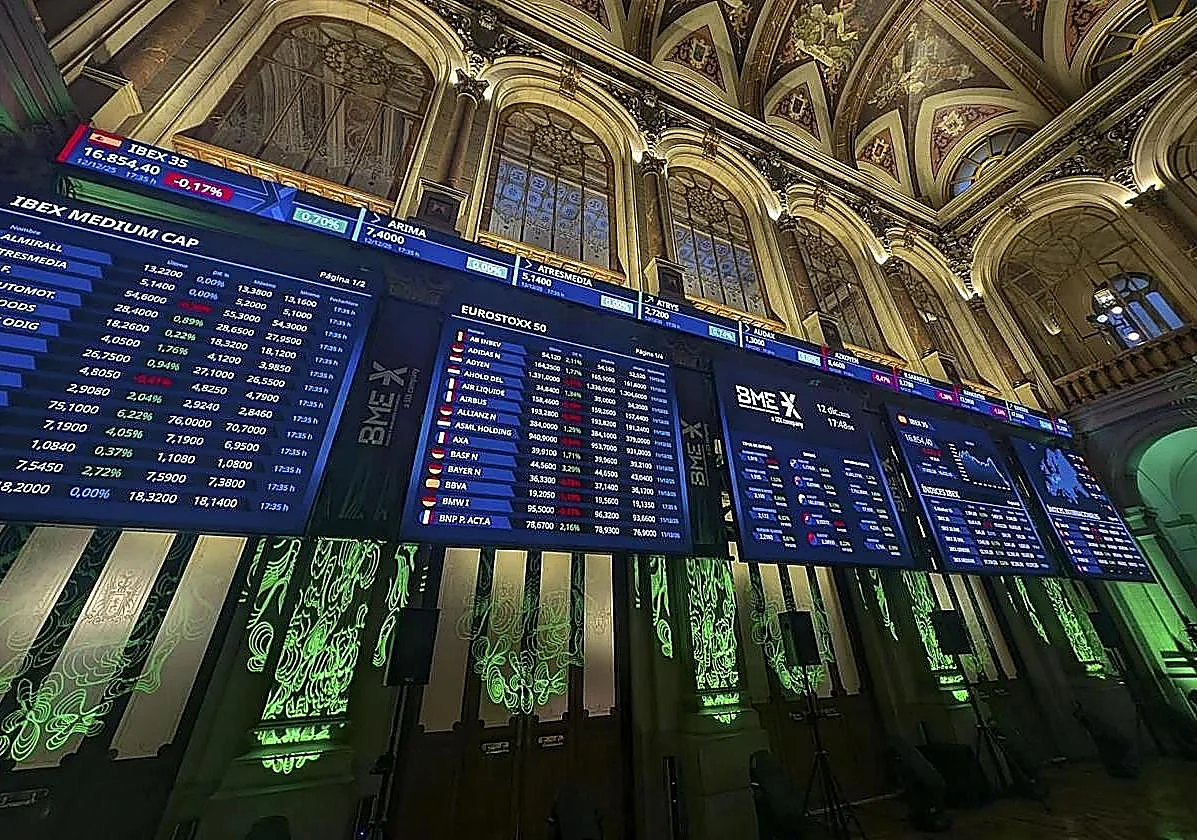
After Friday's late-afternoon setback, Spain's Ibex 35 regained momentum and, after several failed attempts, finally closed above the 17,000-point mark. The index ended the session at 17,041 points, up 1.1%, confirming a new milestone which came as little surprise to investors.
The market had been waiting for days for this record, which consolidates the Spanish stock market among the best assets of the year and as the best trading floor of all western markets, with an accumulated revaluation of 46%. If it closes like this, 2025 will have been the second best year in its history, only surpassed by the 53% rise recorded in 1993.
IAG led the way with a gain of more than 3%, while Ferrovial also joined (+2.4%) after announcing its imminent incorporation into the Nasdaq 100 index. The company reached a record high of 57.72 euros, with the entry of funds and investors adjusting their portfolios to this new milestone for the company on Wall Street.
However, it was the banking sector that once again underpinned the general rises in the Ibex, with large institutions posting gains of close to 3% for Bankinter, 2.5% for Banco Santander and around 2% for CaixaBank, Unicaja, Sabadell and BBVA. Despite this year's dizzying rise, analysts continue to expect strong growth in lending volumes by 2026 to offset the decline in margins due to lower interest rates.
This week, banks face a new key date with the last meeting of the year that the European Central Bank (ECB) is holding on Thursday. The market does not expect any changes in interest rates, but the meeting, which until now has been considered a mere formality, has taken on new relevance following statements by Isabel Schnabel, in which she once again suggested that, after the end of the interest rate cuts, the next move by the institution will be upwards "sooner than many believe".
"The prevailing narrative is that the cycle of rate cuts has largely come to an end and that the impetus for growth in Europe now lies mainly in fiscal policy. Some even suggest that the ECB could start raising policy rates again by the end of 2026," Carmignac analysts state.
The consensus is widespread. "At its next meeting, the ECB faces a surprisingly resilient economy and higher-than-expected inflation and the growth forecast (of 1.2%/1.0%/1.3% for 2025/26/27) could be revised upwards," Generali AM experts say. "Together with ECB's Schnabel's comments that the next policy move could be a hike, markets have started to discount higher interest rates in 2026," the experts state, adding that they do expect the ECB to remain in "hibernation" for a while until it decides to move rates back from the 2% where the benchmark rate now stands.