History
The Andalusian who ‘conquered’ ArgentinaIn the 16th century, Spain did not conquer a unified Argentina (which did not yet exist at the time), but Pedro de Mendoza, a native of Andalucia, founded Buenos Aires — and this happened 490 years ago
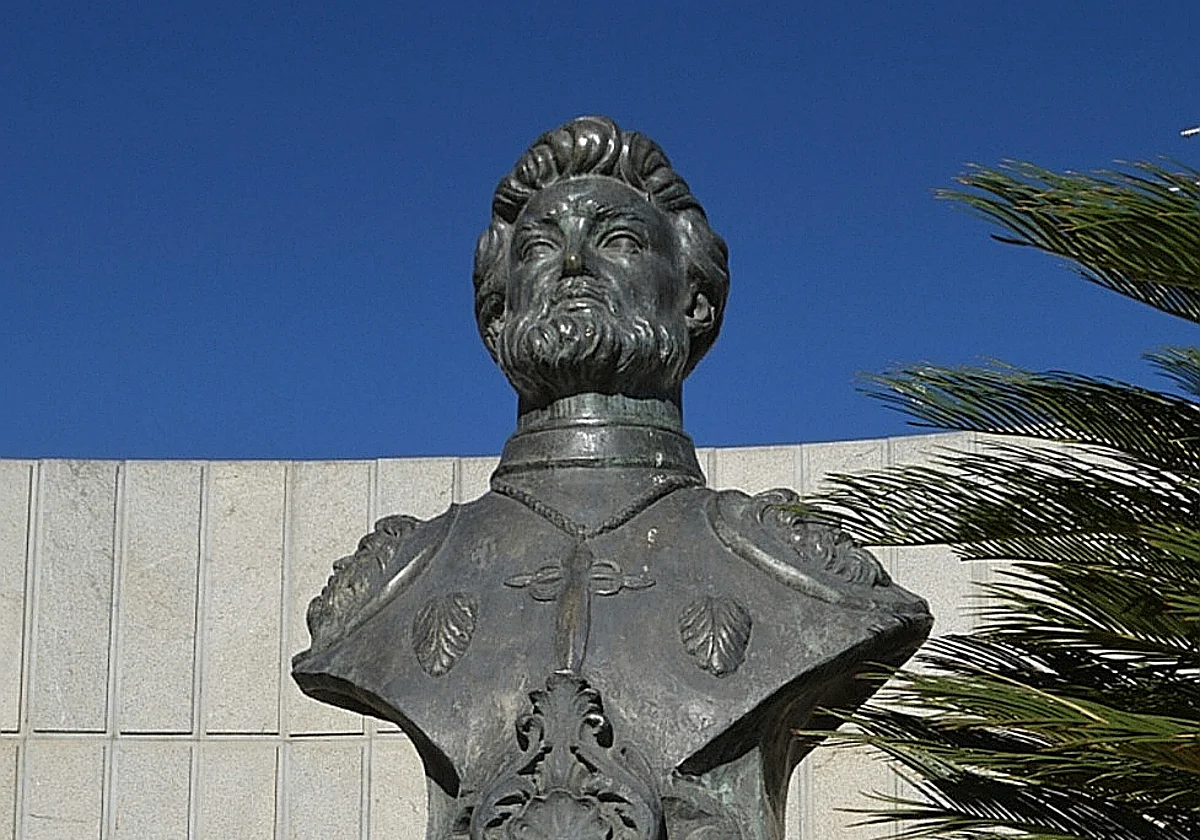
Añádenos en Google A bust to Pedro de Mendoza in Guadix. (AMS)Alekk M. Saanders
Guadix
20/07/2026 a las 11:30h.The Spanish conquest and colonisation of the territory now known as Argentina in the 16th century were accompanied by a series of landmark conflicts and exploratory expeditions. Relations with the local Querandí people, which had initially been peaceful, quickly deteriorated. Pedro de Mendoza, from Andaluсia, was entrusted with leading the first expedition.
Born in Granada province
Pedro de Mendoza was born around 1499 in Guadix (Granada province) where his family settled just after the city was reconquered by the Christians in 1489. He spent his childhood there, in the foothills of the Sierra Nevada. It is only known for sure that at the age of 23, he accompanied Charles V as a page on his journey to England in 1522, and two years later, Pedro de Mendoza joined the Military Order. He was in Italy as part of the army sent by Charles V against Pope Clement VII, and in 1527 he took part in the sack of Rome. On his return to Spain, he continued to serve at the imperial court.
At the age of 23, Pedro de Mendoza accompanied Charles V as a page on his journey to England in 1522
In 1533, he arrived in his hometown to acquire the family estate, as well as several vineyards and plots of land. However, his stay in Guadix was very brief. Aware of the Crown’s plans to organise an expedition to the Río de la Plata, he did not hesitate to volunteer for such an undertaking.
The Andalusian hometown of Mendoza.. (A.Saanders)In Toledo, Pedro de Mendoza signed the capitulation for the conquest of the Río, which conferred upon him high titles of the lands he would discover and settle. This territory stretched between the 25th and 36th parallels, with the possibility of expansion inland as far as the Pacific Ocean.
Incidentally, it placed particular emphasis on the protection and humane treatment of the natives, and underlined the importance of complying with the Royal Decree of Granada of 1526. So Mendoza undertook to bring with him a certain number of clergymen, whose mission included reporting any abuses to the King.
Mendoza undertook to bring with him lots of people from his hometown as well as a certain number of clergymen, whose mission included intervening in any conflicts that might arise with the indigenous population and reporting any abuses to the King
In total, more than 2,000 people took part in the expedition, including members of Pedro de Mendoza’s family and a childhood friend whom he had always held in high regard. Also noteworthy was the presence of his fellow citizens from Guadix, including women.
A gruelling struggle
The fleet set sail from Sanlúcar de Barrameda on 24 August 1535 and reached the Río de la Plata estuary on 2 February 1536. They immediately began surveying the area and searching for the best site on which to establish a settlement. Initially, Buenos Aires, named Nuestra Señora Santa María del Buen Aire, consisted of a square plot of land, surrounded by walls, protected by a moat and a sturdy palisade. Inside, around a hundred huts for the troops, warehouses, storehouses and a church were built, as well as a fortified residence for the governor.
The first 'Buenos Aires' settlement. (SUR)However, the history of early Buenos Aires became a gruelling struggle for survival amid food shortages and sieges by the indigenous peoples. In addition, Mendoza’s fragile health, from the very outset, threatened the already uncertain future of the fledgling project. Despite these setbacks, he nevertheless found the strength to lead an expedition up the River Paraná, culminating in the founding of a new fort.
In the end, Mendoza, being in poor health, set sail for Spain in April 1537 with a party of around 150 men. Halfway through the voyage, his illness took a turn for the worse. He died at sea, near the Cape Verde Islands, on 23 June, and his body was committed to the waters of the Atlantic Ocean.
While Pedro de Mendoza holds the official historical title as the first founder of Buenos Aires, his settlement failed to take hold. It was quickly abandoned and burned in 1541 due to famine and attacks from the Querandí people. Nevertheless, in 1999, Guadix erected a monument to Pedro de Mendoza as an outstanding military commander and the first governor of the Río de la Plata which, by the way, means ‘Silver’.