Zoom
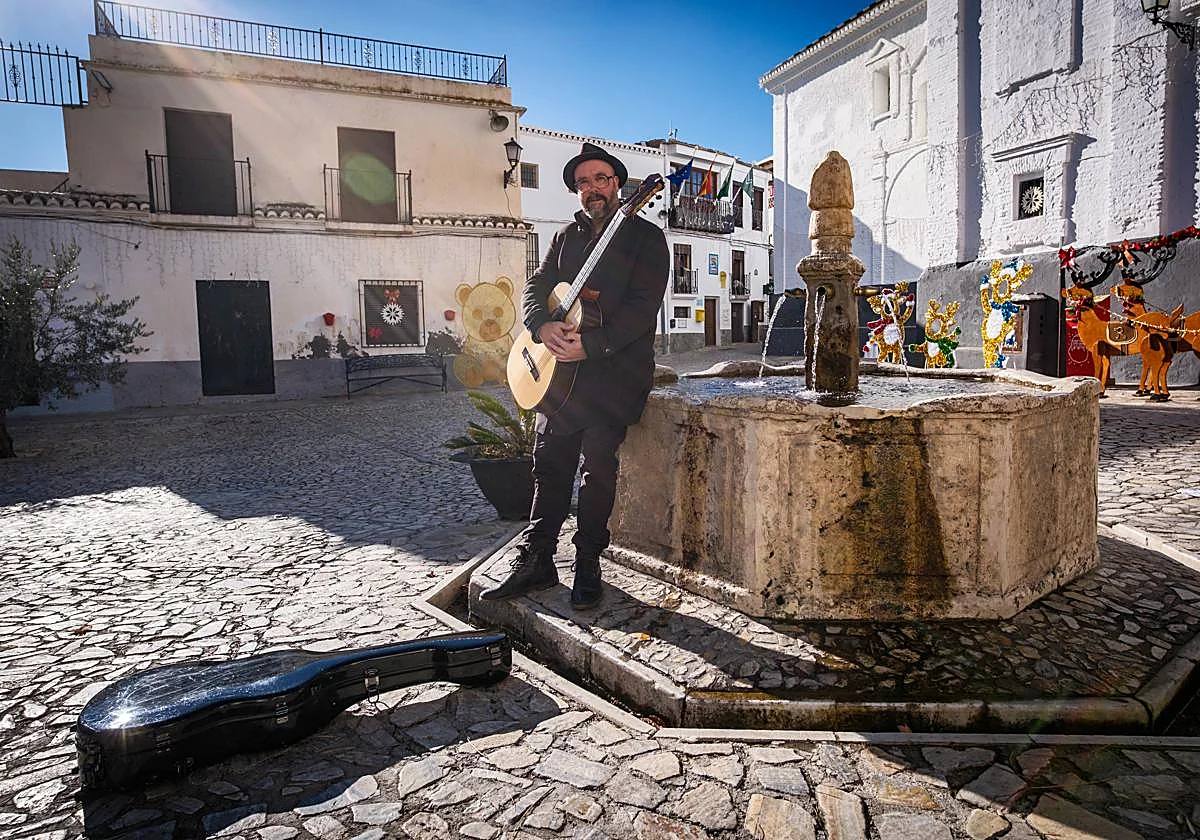
In the village. José lives and enjoys Cáñar day by day. Javier Martín Lifestyle The guitar teacher who moved from Barcelona to a tiny village in Granada's Alpujarra to teach the localsJosé, his partner and his parents, left Hospitalet de Llobregat 10 years ago and settled in the village of Cáñar, where he spent his childhood holidays, saying that there are "too many people" in big cities
Sandra Martínez
Monday, 12 January 2026, 14:49
Ten years ago José Vílchez swapped his life in Hospitalet de Llobregat in Barcelona for the Alpujarra in Granada province. José spent his holidays in the tiny village of Cáñar, which is home to just 400 people. When his father became ill with Alzheimer's, José, his partner and his parents decided to move there permanently.
A decade after that move away from the chaos and traffic of the city, José is as busy as ever: as well as teaching music - giving both private lessons and classes at the local music school - at weekends he also works as a tourist guide in the Alpujarra and enjoys this time surrounded by nature and the closeness of his neighbours.
"We wanted to enjoy a more economical and peaceful way of life," he explains. He says "we" because he embarked on this adventure with his partner, his mother and his father, when the latter became ill with Alzheimer's disease. "We wanted him to have a better quality of life in the last years of his life," José explains.
Quality of life
José's relationship with Cáñar has existed for as long as he can remember because it was the village where he spent all his holidays as a child: "My life is linked to Cáñar, I have always felt Alpujarreño," he adds.
On his way to the cultural centre in Cáñar, where he teaches some of his classes, he stops for coffee in a bar in the village. "I appreciate the contrast between three-year-olds having their first contact with music and older people who are eagerly learning how to play an instrument that they didn't have the opportunity to study at the time," he says.
When he arrived in Cáñar, word spread that there was a music teacher who taught guitar in the area. Now, everyone knows his name and José is one of the many professionals who are committed to making sure that the children in the villages also have opportunities.
Charm of the village
José says that he has no time to get bored and that the routine of his day-to-day life does not allow him to do so. In addition to this, there are typical fiestas, like Santa Ana, in summer, or those of the 'mozuelas' (young girls), in December. "The children go through the streets of the village to sing songs to the women...," he explains.
Here you have everything you need: proximity, leisure and quality of life. But above all, a sense of community and multiculturalism. Neighbours who have become friends come from different parts of Europe: Germany, Holland and England. "I learn from each of them while teaching a universal language, music," he explains.
Sometimes he goes to Granada to get his fix of city life and anything he needs to buy that he can't get in the Alpujarra, but admits he doesn't stay there long. He tells his story while he looks at the horizon and tries to see the Rif mountains in Africa, which are visible in the distance on clear days.
Then he makes his way to his favourite street. It is full of plants and flowers and has a smell that invites you to linger. It is another of the many charms that led to José settling in Cáñar and that make him appreciate the small details. "In the cities there are too many people" he reflects.