Zoom
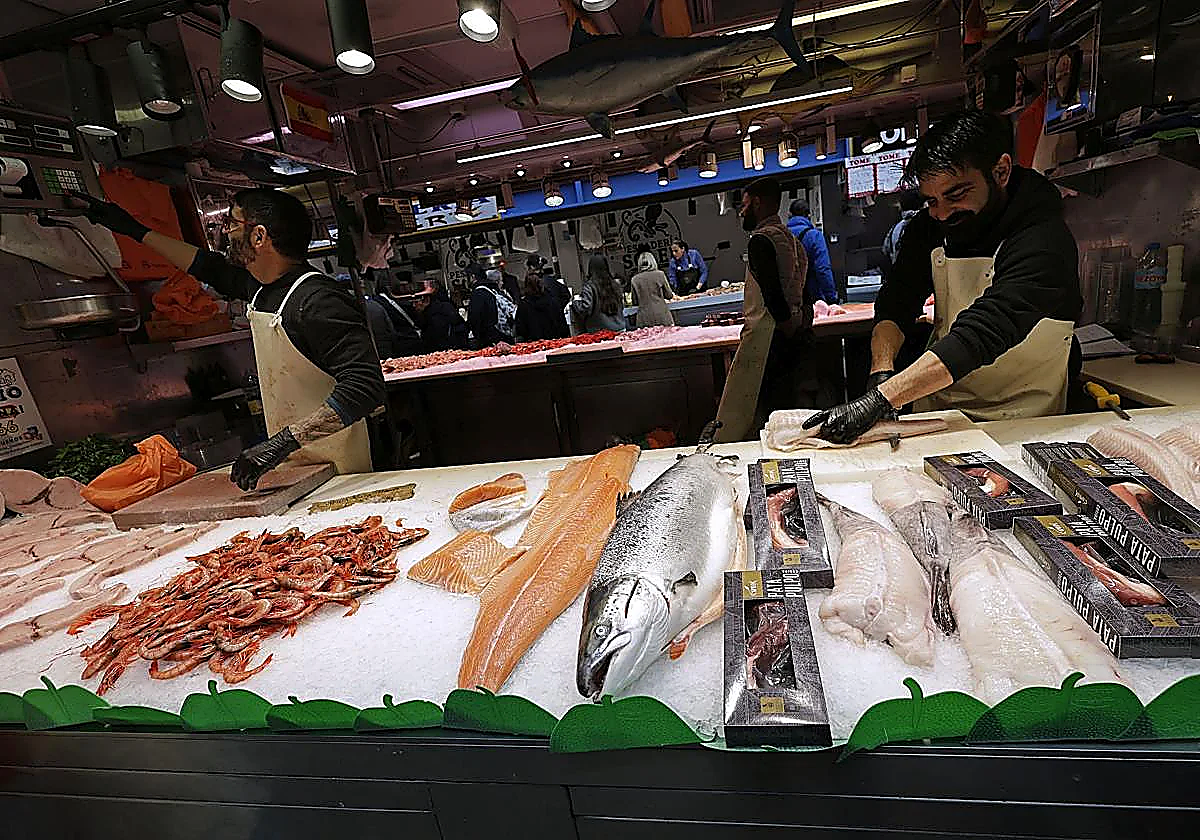
Stalls in the Atarazanas market. Migue Fernández January sales cut clothing costs in Malaga, but grocery bills keep climbingNew figures show inflation has slowed to its lowest rate in 14 months despite a sharp 3.5% spike in the cost of the weekly shop
Friday, 13 February 2026, 13:37
The latest figures from the National Statistics Institute (INE) show a tale of two economies for Malaga residents this month.
While the overall cost of living is rising at its slowest pace since autumn 2024, the price of filling a supermarket trolley has hit a seven-month high.
Malaga’s Consumer Price Index (CPI) eased to 2.5% in January, a significant drop from the 3.2% recorded in December.
This represents the best inflationary figure for the province since October 2024. Nationally, Spanish prices rose by 2.3% over the same period.
In Malaga, that 2.5% - the annual rate at which prices increased - is the best figure since October 2024. In other words, inflation had been running above this level repeatedly over the past 14 months, often above 3%.
Malaga, which is frequently among the provinces where prices rise the most - and has at times even been the most inflationary - drops a few places on this occasion and ranks sixth, level with Badajoz and Las Palmas, behind Madrid, Alicante, Álava, Ourense and Vizcaya.
But it is not all good news. The cost of the weekly shop, by contrast, has once again picked up the pace at which it is rising.
The prices of food and non-alcoholic beverages rose by 3.5% year-on-year in January in Malaga, compared with 2.9% in December: this is in comparison with the 3% increase in the cost of these goods in Spain as a whole.
Such significant rises have not been seen since June 2024, when the increase was 3.7%. From that point onwards, the evolution of the cost of filling the shopping trolley slowed down to the point that during most of 2025 it rose by less than 1%, but at the end of that year it resumed its upward trend.
If the overall index — that is, the cost of living as a whole — eased, this was partly due to the January sales, which led clothing and footwear to record a year-on-year fall of 2.2%, whereas in December their prices had been rising at a rate of 3%.
In addition, transport costs fell by 0.7% thanks to lower prices for fuels for private vehicles, compared with the increase recorded a year earlier. The price of information and communications services also declined, specifically by 0.1%.
Residents of the province also saw relief in the costs associated with housing and its utilities, which went from rising at a rate of 5.8% in December to 2.7% in January. This, the INE explains, is due to the evolution of electricity prices, which increased less than they did in January 2025.
Another factor that also eased off the accelerator was the cost of restaurants and accommodation services, which, having risen by 4.3% at the end of last year, has now fallen to below 4% at the beginning of this year