2 min read
Tropical Storm ArthurImage of the Day for June 19, 2026The first named storm of the 2026 Atlantic hurricane season brought intense rainfall and the threat of flash flooding to the U.S. Gulf Coast.
NASA Earth Observatory
Jun 19, 2026 ArticleTropical Storm Arthur, the first named storm of the 2026 Atlantic hurricane season, brought high winds and heavy rain to the U.S. Gulf Coast in mid-June.
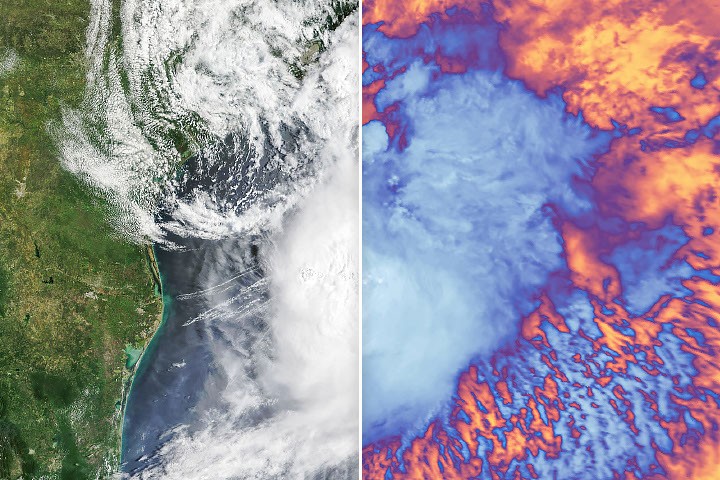
NASA’s Terra satellite captured this natural-color image (left) at 10:30 a.m. Central Time (15:30 Universal Time) on June 17. The second image (right) depicts infrared signals known as brightness temperature, which help distinguish cooler cloud tops (white and purple) from the warmer surface below (yellow and orange). Around the time these images were acquired, the system had just recently been designated a tropical storm, according to the National Hurricane Center (NHC).
Though Arthur stayed below hurricane strength, it still delivered strong winds to parts of the Gulf Coast as it tracked northeast. The storm had maximum sustained winds of 40 miles (65 kilometers) per hour around the time these images were captured. Tropical-storm-force winds extended 175 miles (280 kilometers) from the storm’s center, the NHC reported. Measurements at Galveston, Texas, for instance, showed a gust of 48 miles per hour.
The storm also produced heavy rainfall that the National Weather Service warned could lead to life-threatening flash flooding. Estimates from IMERG (the Integrated Multi-Satellite Retrievals for GPM), a product of the GPM (Global Precipitation Measurement) mission, showed high rainfall rates over Gulf waters and extending inland on June 17.
As Arthur weakened and became less organized, it continued to bring abundant moisture to central Gulf Coast states on June 18. The National Weather Service reported rainfall rates of 3 inches (7.6 centimeters) per hour in southeastern Louisiana. Forecasts indicated that storm-total rainfall amounts could exceed 12 inches (30 centimeters) in areas, with some locations seeing totals approaching 20 inches (51 centimeters).
NASA Earth Observatory images by Michala Garrison, using MODIS data from NASA EOSDIS LANCE and GIBS/Worldview. Story by Kathryn Hansen.
Downloads
June 17, 2026: Natural color
JPEG (2.94 MB)
June 17, 2026: Brightness temperature
JPEG (2.51 MB)
References & Resources
- National Hurricane Center (2026, June 17) Tropical Storm ARTHUR Advisory Archive. Accessed June 18, 2026.
- National Public Radio (2026, June 17) Tropical Storm Arthur is the first named storm of the Atlantic hurricane season. Accessed June 18, 2026.
- National Weather Service, Office of Water Prediction (2026, June 18) Experimental: Tropical Flood Hazard Outlook Product Archive. Accessed June 18, 2026.
You may also be interested in:
Stay up-to-date with the latest content from NASA as we explore the universe and discover more about our home planet.
Typhoon Jangmi 2 min readThe sprawling storm promised to deliver torrential rain across a wide swath of southern Japan.
Article Tropical Cyclone Narelle Crosses Australia 3 min readThe powerful storm lashed the northern edge of the continent with damaging winds and drenching rain as it made landfall…
Article Super Typhoon Sinlaku 3 min readThe violent storm aimed at the U.S. Northern Mariana Islands and Guam in mid-April 2026.
Article Keep ExploringDiscover More from NASA Earth Science
Subscribe to Earth Observatory Newsletters
Subscribe to the Earth Observatory and get the Earth in your inbox.
Earth Observatory Image of the Day
NASA's Earth Observatory brings you the Earth, every day, with in-depth stories and stunning imagery.
Explore Earth Science
Earth Science Data
Open access to NASA’s archive of Earth science data